Showing posts with label Jabhat al-Nusra. Show all posts

Sunday, March 1, 2015

ISIS, Nusra and "Khorasan": What's the difference?

[Originally posted at NOW]

NOW profiles the various jihadists now under American bombardment in both Iraq and Syria.

The Islamic State of Iraq and al-Sham (ISIS) jihadist faction – or “The Islamic State,” as it has called itself since declaring the establishment of a caliphate spanning eastern Syria and western Iraq in June – has been the target of over 190 American air strikes on the Iraqi side of the border since US President Barack Obama launched what has officially become a campaign to “degrade and ultimately destroy” the group on 7 August.

On Tuesday, that campaign expanded for the first time into Syria, where a coalition led by the US, but also including five Arab states, has since launched aerial and naval missile attacks on over 16 ISIS positions at the time of writing. In a surprise additional move, the US also carried out 8 strikes on what the military called the “Khorasan Group,” a shadowy entity said to be an external Al-Qaeda cell embedded among units of Al-Qaeda’s official Syrian subsidiary, Jabhat al-Nusra. Despite the US’s implied distinction between so-called “Khorasan” members and regular Nusra Front fighters, it’s unclear to what extent that has held up on the ground, with some reports citing Syrian rebels and activists to the effect that the sites hit were well-known Nusra bases.

In the hopes of mitigating some of the inevitable confusion between the three groups, NOW spoke to analysts and experts to clarify their various similarities and differences.

ISIS v Nusra

The broad outlines of the ISIS phenomenon have been made familiar to millions in recent months, as the group’s atrocities and dramatic territorial advances have dominated headlines around the world. With just a few hundred men, they chased an estimated 30,000 troops out of Iraq’s northwestern Ninawa Province in a matter of hours in June. They’ve released gruesome footage of their fighters casually beheading Western civilian hostages, each time revealing another captive next in line to be murdered. Other broadcasts include graphic videos of wild killing sprees carried out on the streets of Iraq, and mass executions of prisoners of war. As a result of their excommunication from Al-Qaeda by Ayman al-Zawahiri, in February, they are often described as the jihadists “too extreme” even for the masterminds of the 9/11 attacks.

But is Nusra any different? Strange as the notion of ‘moderate’ jihadism may seem, it is sometimes argued that the Al-Qaeda franchise is at least comparatively pragmatic, and there is ostensibly some evidence to support the case. In contrast to ISIS’s beheading of journalists James Foley and Steven Sotloff, in August Nusra freed an American journalist, Peter Curtis, whom they had held for nearly two years. In early September, the group also freed 45 Fijian UN peacekeepers taken hostage in the Syrian Golan Heights.

And in Lebanon, whereas ISIS beheaded two Lebanese soldiers captured in recent clashes with the Lebanese Army in the border town of Arsal, Nusra freed five captives it had itself taken during the battle, though it has since shot one dead and threatened to kill a second.

Analysts told NOW the key distinction between the two factions was one of method – as opposed to ideology or long-term objectives – with Nusra seeking to maintain positive relations with other rebel groups and local actors, whereas ISIS seems almost to relish conflict with them.

“In Syria, they have had two very different approaches,” said Daveed Gartenstein-Ross, Senior Fellow at the Foundation for Defense of Democracies and author of Bin Laden’s Legacy: Why We’re Still Losing the War on Terror. “ISIS has never played well with others. Prior to its dramatic advance into Iraq in June, it basically exclusively took territory from other rebel groups, as opposed to from Assad. Whereas, on the other hand, Nusra was very well embedded with other rebel groups.”

In part, Gartenstein-Ross told NOW, this was a result of “lessons learned” from Al-Qaeda’s prior experience in Iraq, where it lost ground after 2007 by “alienating” its erstwhile allies. While Al-Qaeda concluded it “needed to work better with other people […] ISIS drew a very different lesson.”

As far as ideology goes, “there’s not an enormous amount of difference,” said Gartenstein-Ross. “They’re different tactically and strategically, but ideologically Nusra is part of Al-Qaeda, and Al-Qaeda is dedicated to reestablishing the caliphate. They reject the legitimacy of ISIS’s caliphate declaration, but if you look at their goals and eschatology, they’re really on the same page.”

The Khorasan wildcard

The general perception of ISIS as the world’s most dangerous jihadist outfit has been complicated recently by US intelligence claims of the existence of an external, elite Al-Qaeda cell sent personally by Zawahiri to join Nusra militants inside Syria, not to fight the Bashar al-Assad regime, but to plot spectacular, mass-casualty attacks on civilian targets in the West. This cell, dubbed the “Khorasan Group” in reference to the antiquated name used by Al-Qaeda for the region in which its members were previously based (including Iran, where the cell’s Kuwaiti leader, Muhsin al-Fadhli, was quietly hosted by the ruling regime) was said by Washington to pose a more “direct” threat to the West than ISIS. Or, rather, it was, until the “individuals plotting and planning” the attacks were “eliminated” Tuesday by US air strikes, in the words of Pentagon spokesman Rear Admiral John Kirby.

While American claims about the “Khorasan Group” are impossible to verify independently, Gartenstein-Ross told NOW they tallied with previous activities undertaken elsewhere by Al-Qaeda, such as in Yemen, where the Saudi bomb maker and Al-Qaeda in the Arabian Peninsula (AQAP) member Ibrahim al-Asiri is believed to have developed the explosives used in numerous operations, such as the attempted Christmas Day 2009 blowing up of a passenger jet in Detroit.

At the same time, there is skepticism about the veracity of the US’s claims regarding “Khorasan” among some within the Syrian opposition, who see them as a pretext to weaken Nusra itself, which was designated a “terrorist” entity by the US in 2012.

“We have no idea who these people are,” said Qurai Zakarya, an opposition activist and survivor of the Assad regime’s August 2013 chemical weapons attack outside Damascus. “Throughout all my work in Syria, I never heard about them. And other activists are saying the same.”

“Ever since we heard about them in the news, we’ve been trying to find out who they are and so far we have no answer. Nobody knows anything about them.”

Myra Abdallah contributed reporting.

Arsal civilians trapped between shells and snipers

[Originally posted at NOW]

NOW talks to Arsal residents caught in theater involving Lebanese army, Hezbollah, and militants.

As clashes rage Monday for the third day running between foreign Islamist militants and the Lebanese army – reportedly in cooperation with Hezbollah – in the remote eastern border town of Arsal, the more than 80,000-strong population, which includes over 40,000 registered Syrian refugees, is caught in a deadly trap in the middle, between the militants’ guns on the one hand and intense barrages of incoming artillery on the other.

“Armed people were everywhere,” said Khaled Hojairi, a Lebanese Arsal resident who managed to flee the town at 2pm Sunday. “I saw them shooting randomly. I had to be very careful to avoid being shot,” he told NOW.

“Yesterday, [militants] tried to target an army position close to my house,” said Abu Muhammad*, another Arsal native who spoke to NOW via telephone. “I helped the soldiers to escape by hosting them in my house for a while.” As a result, a “direct armed confrontation” ensued between the militants and local residents who took up arms to repel them.

Hours later, Abu Muhammad said his home “was [hit] by heavy weapons, the kind that only the Lebanese army and Hezbollah have […] Arsal is now being bombed randomly, all the houses are being targeted equally without differentiating between one and another.”

Along with more than a thousand other Lebanese – but not Syrians, who have reportedly been forbidden to leave – Abu Muhammad was able to flee Arsal during a temporary calm on Monday morning.

The vast majority of residents, however, were not so fortunate, and the sealing of the only road in and out of the town later Monday morning forced them to remain stuck in the middle, under fire from all sides.

“The civilians are trapped, because they can’t go in or out,” said Carol Malouf, a journalist and activist who runs a Syrian refugee camp in Wadi Hmayed, the barren, mountainous region just east of Arsal where the militants – thought to be affiliated with the Islamic State (formerly Islamic State of Iraq and al-Sham) and Jabhat al-Nusra factions – triggered the battle Saturday by ambushing a Lebanese army checkpoint, killing two soldiers.

“When [civilians] try to leave, there are a lot of snipers shooting at them,” Malouf told NOW. At the same time, “there has been a lot of indiscriminate shelling. Our camp in Wadi Hmayyed was hit and several tents were on fire yesterday.” A temporary truce effected at 21:00 on Sunday enabled the transfer of most of the camp residents to Arsal town center, but Malouf says they remain in significant danger there.

“The militants have checkpoints in [Arsal] itself and at its entrance,” she told NOW. “If [civilians] stay, there is fear they will be taken as human shields by the militants.”

Conditions are even worse for the scores of injured civilians who, according to Abu Muhammad, are being treated on the floors of overwhelmed local medical facilities, unable – due to the closed road – to be taken to hospitals in the nearby Beqaa Valley.

“It’s really bad, and we really need to focus on getting the civilians out,” said Malouf.

To that end, a ceasefire was ostensibly agreed upon Monday evening, supposed to come into effect at 18:00, to enable a delegation of the Association of Muslim Scholars to enter the town and negotiate the evacuation of injured civilians, the release of Lebanese soldiers held by the gunmen, and the latter’s withdrawal from Lebanon, according to Nabil al-Halabi, a member of the delegation who spoke to NOW moments after it had been agreed. The latest official information from the Lebanese army is that 14 soldiers have been killed and 86 wounded, while 22 are unaccounted for (many presumed held by the militants).

The ceasefire had not, however, come into effect at the time of writing, and was in any case not expected to be a lasting one. More army units were seen heading into Arsal and firing artillery just minutes before the ceasefire’s appointed time, and Prime Minister Tammam Salamdeclared in a statement not long before then that there would be no “leniency, truce or political solution” with the “murderous terrorists.”

Indeed, there are signs the military’s operation could expand significantly. In what appeared to be a corroboration of multiple reports of Hezbollah’s involvement in the shelling of the town, the head of the party’s religious council, Sheikh Muhammad Yazbek, said Monday “we will not leave the army [to fight] alone,” pledging to “defend [against the militants] with all the power in our hands.”

And, shortly after a Twitter account called “Arsal News Network”reported the presence of Syrian regime MiG fighter jets above Arsal Monday afternoon, the National News Agency reported a “series” of Syrian air strikes on “positions of gunmen along the Lebanese-Syrian border.”

Such developments would in fact be consistent with an assertion by the mayor of the nearby town of Labwe last Wednesday that the Lebanese army, Hezbollah and the Syrian regime would soon commence a joint “operation” to “put an end to terrorism along the border.” If so, the political consequences of such open cooperation between the Lebanese army and these controversial, polarizing actors could be far-reaching.

“If Arsal is being bombed by the Lebanese army, this is a problem,” said Abu Muhammad.

“And if it is being bombed by Hezbollah while the Lebanese army is doing nothing about it, this is a bigger problem.”

*NB: Citing fears for his and his family’s security, the source asked to be referred to by a pseudonym.

Myra Abdallah contributed reporting.

Tuesday, May 13, 2014

Is Lebanon Winning Against Al-Qaeda?

[Originally posted at the Carnegie Endowment for International Peace's Sada journal]

Despite its weak and fragmented state, Lebanon has had evident success against al-Qaeda, though it may be too soon to declare “mission accomplished.”

In the first two months of 2014, Lebanon appeared to be descending rapidly, almost inexorably, into a mire of alarming bloodshed and instability. An unprecedented wave of al-Qaeda-linked attacks on civilians was accelerating, adding 34 deaths to the more than 50 men, women, and children that such attacks had killed in the second half of 2013. And then, almost without anyone noticing, the attacks ceased. April 2014 was the first month to witness no explosion since October 2013. Even before then, a slowdown had been detectable—from five suicide bombings in February 2014 to two in March, the latter confined to the Syrian border region. Hassan Nasrallah, the leader of Hezbollah, stated confidently in an April interview that “the risk of [further] explosions has diminished very significantly.” While this was a plainly political statement—aimed at retroactively justifying his group’s controversial military intervention in the neighboring Syrian war on the side of President Bashar al-Assad—it appears to have held up so far, and has been echoed by the head of the Lebanese army.

How, then, did a weak and fragmented state like Lebanon manage to prevail against al-Qaeda? The principal reason was that al-Qaeda’s Lebanese franchisees, Jabhat al-Nusra and the Abdullah Azzam Brigades, united Lebanon’s most powerful actors against them. Foremost among these actors is Hezbollah, which, in addition to its paramilitary manpower and hardware, also maintains its own intelligence-gathering and telecommunications networks that allowed them to keep close tabs on the two groups. Jabhat al-Nusra and the Abdallah Azzam Brigades made hostility to Hezbollah their raison d’être, branding it a heretical “Party of Satan” (playing on its name, which means “Party of God”) and stating after every attack that they would continue until the party’s militants withdrew from Syria. Then there are the state forces, which also run multiple and sizeable intelligence-gathering operations. The general outline of the response to the attacks, then, consisted of a manhunt carried out by state security forces in tandem with Hezbollah, based on their combined intelligence, with the blessing of the political establishment and its international backers, including the United States.

This manhunt involved both arrests and targeted killings. In March 2014, a militant wanted for involvement in at least one of the car bombings in Beirut’s southern suburbs was gunned down in a Lebanese army ambush in the mountainous outskirts of the town of Arsal, near the Syrian border. Less clear were the circumstances of the October 2013 killing of a suspect wanted in connection with two car bombings, whose vehicle was reportedly targeted by rocket fire in a remote area, also near Arsal. While state media described it simply as an “armed ambush,” Hezbollah was also accused. Similar mystery surrounded the death in custody of Majid al-Majid, the internationally wanted Saudi leader of the Abdallah Azzam Brigades, credited with masterminding a double suicide attack on Beirut’s Iranian embassy in November 2013. His demise in December, just nine days after his arrest by Lebanese army intelligence, was officially attributed to natural causes—but the Brigades blamed Hezbollah, who in turn pointed the finger at Riyadh.

State authorities also made swift progress on other fronts. A jihadist cleric from Arsal arrested in January 2014 reportedly informed the army of the identity of one Naim Abbas, a Palestinian refugee who became Lebanon’s most wanted suspect and was arrested the following month. Abbas was charged with overseeing two suicide bombings in Beirut’s southern suburbs and reportedly revealed the locations of several explosive-laden vehicles, which were subsequently intercepted by the army. Various other associates of Abbas were also arrested.

As the arrests and indictments mounted, a clearer picture began to emerge of how the militants operated. Prosecutors identified a network linking the Palestinian refugee camp of Ain al-Hilweh in the southern city of Sidon with the eastern border town of Arsal. A common denominator in more than one attack was the fugitive Lebanese cleric, Sheikh Ahmad al-Assir, who went into hiding after his militiamen fought a bloody battle with the army and Hezbollah in Sidon in June 2013. At least three suicide bombers claimed in video testimonies to have fought alongside Assir’s men in the clashes.

It was Arsal, however, that Hezbollah officials repeatedly branded as the principal gateway for extremists entering Lebanon from Syria. Three kinds of checkpoints were set up around the town—two manned by the army, and one by Hezbollah gunmen (aptly symbolizing the partnership between the two). Though the latter checkpoints became notorious for harassment and even violence against passers-through, and were eventually removed, the system did have some success as a barricade against attacks—both of the two most recent suicide bombings took place at these checkpoints.

Undergirding all these efforts was the carte blanche given to the army and Hezbollah by the political class, including the patrons of the Sunni community. This in turn was encouraged by influential regional and international powers, including the United States, which has reportedly been sharing intelligence with the Lebanese authorities since July 2013; this was apparently instrumental in the arrest of Naim Abbas. “What happened proves once again that the security situation in Lebanon is directly related to the political situation,” said Riad Kahwaji, head of the Institute for Near East and Gulf Military Analysis. “Whenever we have political agreement, the security situation suddenly becomes very good.”

With that said, the “mission accomplished” attitude struck by Nasrallah and the army commander may yet prove premature, as well as counterproductive. For while Hezbollah may tout its recent advances in Syria’s Qalamoun region on the Lebanese border as a “grand victory” against “terrorism,” this will only harden the hostility felt toward the Shia group by the many Lebanese Sunnis who continue to see the Syrian rebel cause as a just struggle against tyranny. While the country’s Sunnis are on the whole a moderate community, any inflammation of sectarian animosity can only be a boon to the extremist minority, which has grown in numbers and resources as a result of the Syrian war—particularly after Hezbollah’s intervention there.

That Hezbollah has given no indication it intends to withdraw any time soon—and is, indeed, believed to be eyeing new offensives in Aleppo and Daraa—means a fundamental underlying cause of the jihadists’ proliferation is set to remain for the foreseeable future. Moreover, it remains possible that Hezbollah’s displacement of Syrian rebels, including al-Qaeda-linked militants, from Qalamoun has in fact had the effect of drawing them across the highly porous border into Lebanon. New reports of Jabhat al-Nusra conducting kidnappings in Arsal, following a series of skirmishes between Syrian gunmen and the Lebanese army in the area, suggest this process may already be underway. In which case, Lebanon’s al-Qaeda problem may not have been resolved so much as merely interrupted.

Thursday, March 13, 2014

[Infograph] Tracking Lebanon's bomb suspects

[Originally posted at NOW, with accompanying infograph]

As a complement to the infograph illustrating the series of vehicle explosions to have struck Lebanon since the outbreak of the Syrian crisis, NOW turns below to profiling the key individuals suspected of involvement.

To date, suspects have been identified by Lebanese officials for nine of the eighteen vehicle explosions, from the 9 July, 2013, Bir al-Abed car bomb to the 19 February, 2014, suicide bombings of the Iranian Cultural Chancellery. They range from Lebanese and Palestinian followers of fugitive Sidon cleric Sheikh Ahmad al-Assir to Syrian intelligence operatives and their local proxies to internationally-wanted Saudi jihadists.

Of the remaining nine attacks for whom no individual suspects have been named, four have been claimed by Islamist groups, and five – including the assassinations of police intelligence chief Wissam al-Hassan and former minister Muhammad Shatah – have not been claimed by anyone.

The list may not be comprehensive, and covers only those accused of involvement in specific vehicle explosion attacks. It does not, therefore, include individuals arrested on generic charges of "terror" or of merely belonging to militant factions. There is a degree of overlap between the groups – both the Abbas-Atrash ring and the Iranian embassy team, for example, include Abdallah Azzam Brigades members.

As with the infograph, the list will be updated when new data emerge.

Wednesday, February 19, 2014

[Infograph] Vehicle explosions in Lebanon since 2011

[Originally posted at NOW, with accompanying infograph]

Since the outbreak of the Syrian crisis in early 2011, Lebanon has witnessed a multifarious deterioration in security, as tensions between domestic supporters and opponents of the Bashar al-Assad regime have sporadically broken out into armed clashes, assassinations, rocket attacks and roadside bombings.

Moreover, since October 2012, the violent fallout from the civil war next door has increasingly taken the form of deadly vehicle explosions, including suicide bombings. These attacks have recently increased in frequency, with five in the first five weeks of 2014 alone, compared to eight in 2013 and one in 2012. Many of the latest bombings have been claimed by extremist Islamist groups with links to al-Qaeda, such as Jabhat al-Nusra in Lebanon, who have declared their intention to continue targeting predominantly Shiite civilian population centers until Lebanese Hezbollah fighters withdraw from Syria; a demand the pro-Assad group has repeatedly rejected. All in all, a total of 123 people have been killed so far by 14 explosions.

Above are two graphics illustrating the timing, location, and outcome of each of these vehicle explosions. Should more occur in the future, NOW will update the graphics accordingly.

Thursday, February 13, 2014

New Qalamoun offensive may further destabilize Lebanon

[Originally posted at NOW]

The battle for Yabrud has already brought new refugees, and may further fuel jihadist attacks.

When in November 2013 the Syrian regime and its allies began their determined campaign to conquer Qalamoun, the rocky highlands extending for some 70km along the Syrian-Lebanese border, there was always inevitably going to come a day of reckoning for the town of Yabrud, the comparatively developed and prosperous multi-faith “capital” of the strategic region.

That day appeared to arrive Wednesday, as regime shelling of the rebel-held town – underway since Friday – escalated into at least a dozen air strikes, according to local residents, international monitors, and fresh video footage. “The battle has begun,” said Qalamoun-based media activist Omar al-Qalamouni to NOW. “And it’s going to be bloody.”

Indeed, observers point to several factors that suggest the coming offensive will be especially intense. Beyond Yabrud’s symbolic value, it’s also one of the last remaining lifelines connecting rebels in Qalamoun to allies in the adjacent Lebanese town of Arsal. “Controlling Yabrud, from the regime’s perspective, means cutting the path to Arsal,” said Qalamouni. The rebels’ continued dominance over the town also threatens the regime’s hold on the arterial Damascus-Homs highway.

Moreover, the prominent regime ally Hezbollah has made its own case for the significance of holding Yabrud. In a speech Friday, the Party’s deputy secretary-general, Naim Qassem, claimed the town was “the original source of the explosive-rigged cars” that have targeted Lebanese civilian centers in recent weeks. Whether or not this is in fact true, it suggests Hezbollah will play an active role in the coming battle, said Qalamouni.

“Hezbollah will surely participate, because it’s mainly their battle. They’re the ones advertising it,” he told NOW.

The general strategy of the regime and its allies will likely take the form of fierce aerial bombardment followed by a ground campaign, according to Charles Lister, Visiting Fellow at the Brookings Doha Center.

“The Syrian military has perfected a strategy of imposing a sustained level of bombardment on an area and its surroundings in order to flush out civilians and pave the way for a ground assault targeting any fighters that remain,” Lister told NOW. “As such, artillery and air strikes will likely continue to intensify in the next day or two and clashes around the town will steadily escalate to the point at which an actual offensive begins en masse on the town itself.”

As against this, it’s unclear what, if anything, the opposition can do to meaningfully check the offensive once it’s in full swing. According to both Lister and a source who has recently visited Yabrud several times, the vast majority of rebels in the town belong to local, comparatively ill-equipped brigades, as opposed to the more effective forces such as Jabhat al-Nusra and Ahrar al-Sham which preponderate elsewhere (though the latter groups, Lister believes, may later decide to join the fight in Yabrud). The most probable overall strategy, says Lister, will be to try and divert the regime’s attention away from the town to whatever extent possible.

“As in the past, rebels in the wider Qalamoun region will seek to carry out diversionary operations in an attempt to force a division of military personnel away from Yabrud,” he told NOW. “Targeted attacks on military positions, car bombings, and suicide attacks are all possible.”

Adding to Lebanon’s woes

Lebanon was never likely to avoid feeling the effects of such a significant battle so close to its border, and indeed, Yabrud residents have already started arriving in Arsal seeking refuge, according to UN Refugee Agency spokesperson Joelle Eid. Should the population in Yabrud and its surroundings become entirely displaced, Arsal may be faced with a new influx numbering in the tens of thousands, according to the aforementioned source, who requested anonymity as he was not authorized to talk to the press.

“Approximately, we’re talking about some 70,000 residents who would move in the direction of Damascus, and perhaps 50,000 who could end up in Arsal,” he told NOW.

The refugee burden, however, may not be the worst of the repercussions for Lebanon. Reports earlier this week of Hezbollah’s preparation for Yabrud fuelled concerns among some analysts of a consequent increase in reprisal attacks on Lebanese civilians carried out by extremist Islamists. A number of groups with ties to Syrian jihadist brigades, such as Jabhat al-Nusra in Lebanon and the Islamic State of Iraq and al-Sham (ISIS), have claimed responsibility for deadly explosions and suicide bombings in predominantly Shiite areas of the country in recent weeks, typically justifying them as responses to Hezbollah’s intervention in Syria.

“A defeat [for the rebels in Yabrud] could potentially encourage further retaliatory attacks inside Lebanon, both in the Beqaa and in Beirut,” Lister told NOW, “although it should be noted that the motivation for such attacks already exists.”

Indeed, with five vehicle explosions in Lebanon in 2014 alone – four of them claimed by jihadist groups – there has already been unprecedented appetite among Sunni extremists for the kind of wanton slaughter of Shiite civilians more readily associated with Baghdad than Beirut.

And if Wednesday’s discovery by the Lebanese army of two cars rigged to explode – one of them in Arsal itself – is anything to go by, that appetite is showing little sign of abating any time soon.

Luna Safwan contributed reporting.

Tuesday, February 4, 2014

Lebanon's new bombs: Killing fewer, but more frequently

[Originally posted at NOW]

Today’s suicide attack in Choueifat, south of Beirut, is the 14th vehicle bombing to have hit Lebanon since the outbreak of the Syrian crisis, and the 5th to have occurred in 2014 alone. I only know this because, since the November 2013 double suicide bombing of the Iranian embassy, I’ve felt the need to maintain a database recording the details of each attack; thinking it was an unhealthy sign when one started to lose track of the number of murderous explosions taking place in one’s own country of residence.

A more comprehensive analysis of these data, complete with interactive graphics, will be published by NOW in the coming days, but in the meantime, the following observations may be among the most salient:
  • While earlier car bombs tended to be infrequent, but massively destructive spectacles (e.g. the 15 August 2013 Ruwais bomb, killing 27, and the twin Tripoli mosque bombs 8 days later, which killed 45); the last seven have occurred with much higher frequency, but with lower death tolls (all claimed fewer than 10 lives)
  • Seven of the fourteen (50%) have occurred in Beirut and its southern suburbs, with the remainder taking place in Tripoli, the south, and the Beqaa Valley.
  • Jabhat al-Nusra in Lebanon is the only group to have claimed more than one attack (it’s claimed three so far). The Islamic State of Iraq and al-Sham, the Abdallah Azzam Brigades, the Aisha Mother of the Believers Brigade, and the 313 Special Forces Brigade have each claimed one. Seven attacks have not been claimed by anyone.
  • Two of the bombings have been assassinations (of police intelligence chief Wissam al-Hassan in October 2012 and former ambassador and minister Mohamad Chatah in December 2013).
  • The 14 bombings have killed a total of at least 122, with a number of wounded still hospitalized in critical condition.
Look out for much more detail in NOW’s upcoming interactive report.

Sunday, February 2, 2014

Assir's media return buoys supporters, frightens others

[Originally posted at NOW]

ABRA, Lebanon – A first-time visitor to the Bilal bin Rabah mosque complex today in Abra, east of Sidon, might never guess there were several days of intense rocket and machine gun clashes here just over seven months ago, killing 18 Lebanese Armed Forces (LAF) soldiers and around 40 gunmen loyal to the mosque’s imam, Sheikh Ahmad al-Assir.

The once-devastated apartment block housing the mosque, which had entire wall panels blown out when NOW saw it after the June 2013 fighting, has now been immaculately repaired and restored, a “For Rent” banner hanging from one balcony indicating that it is inhabitable once again. Long gone, of course, are the young men standing guard outside with AK-47s hanging by their sides. (Those who weren’t killed or arrested have, like Assir himself, gone into hiding.) Gone too are the heavy-duty barriers installed by the sheikh on the side-streets leading up to the mosque complex, as well as a protective metal roof constructed above the mosque’s entrance. Some new shops have opened up in the adjacent small square; others have closed down. The whole block has the eerie air of the scene of an historic and infamous crime, mopped up and painted over but still evidently raw in the memories of those who witnessed it.

Thus when NOW asked local residents Friday about their thoughts on Assir’s recent reappearance in the media, many who still supported him would only say so in lowered voices. “Inshallah (God willing) he’ll return,” murmured one adolescent worker in a bakery before returning to the oven. Others would reveal their sympathies only in roundabout or implicit ways. A few, however, remained as outspoken as ever – seeing perhaps that NOW were journalists, the driver of one passing car raised his fist out the window and shouted, “Sheikh al-Assir, God protect you!”

For such people, the reemergence of the sheikh on social media networks has evidently been a great boon. Having not used his Twitter account since August 2013, Assir surprised followers with a new message on 14 January, and has since posted over 25 times. The messages generally address current events in Lebanon and Syria, peppered with Qur’anic citations and the derogatory references to “Safavids” (Shiites and/or Persians) and “Hizb al-Lat” (a pun on “Hezbollah” implying idolatry) that are the hallmark of hardline Sunni Islamism. On Syria, he sarcastically says the siege of the Yarmouk camp is the “true picture of the support of Iran and [Hezbollah] and Assad for the Palestinians and their cause,” and laments that “the world” cares more about “the mujahideen” in Syria than the regime’s “planes dropping barrel bombs, and chemical weapons, and slaughter with knives.” He also calls for the release of kidnapped Christian priests and nuns, “[even though] many Christian clergymen and politicians stood with Assad and justified his criminality against our people.” On Lebanon, he says the “main reason” for the recent wave of explosions is “[Hezbollah’s] criminality in Syria,” defending March 14, the Future Movement, and President Michel Suleiman from accusations of responsibility. At the same time, he accuses Future leader MP Saad Hariri of providing “cover” for the continuing presence of the army (labeled a “tool” of Hezbollah) in Abra, and mocks March 14’s recently-launched “civil resistance” campaign, the “first result” of which was “the approval of a unity cabinet with [Hezbollah] covering their criminality in Lebanon and Syria.”

As before, it is this posture as an uncompromising defender of “the Sunni people” (Ahl al-Sunna) that appeals to Assir’s supporters. “[Some] still say they don’t feel secure anymore [after his disappearance],” a butcher near the mosque told NOW. “They say he used to protect this area.”

Yet the violent legacy of his movement has also left many in the neighborhood fearful of his reemergence, particularly in the wake of rumors tying him to extremist groups. A Twitter account said to belong to one of his wives wrote on 16 January that efforts were underway to make Assir the head of the Lebanese branch of Jabhat al-Nusra, the Al-Qaeda offshoot that has claimed two deadly suicide bombings in Lebanon* since the announcement of its formation in December 2013 and is believed to have around 170 fighters based in Sidon’s Ain al-Hilweh refugee camp. Also in December, one LAF soldier was killed and three wounded in dual attacks on army checkpoints in Sidon, including one close to Assir’s mosque. And on Friday, concerns of possible further attacks in Sidon, including car bombings, prompted authorities to implement new security measures in the city.

“He could be affiliated with any extremist group, in my opinion, because the people who don’t know God tend to bond together. […] May God take his soul,” said a baker near the mosque (at which point his younger apprentice indignantly retorted, “May God protect him!”).

“Most of us were relieved when Assir left, as though a rock were lifted off our chests,” said the manager of a nearby money transfer outlet. “I can’t tell what his possible affiliations are, but I fear he’s affiliated to a group that is worse than Jabhat al-Nusra or the Islamic State of Iraq and al-Sham, like Al-Qaeda itself.”

“His return to the media spotlight definitely caused tension, because we here still have a feeling that things aren’t okay and something is being prepared,” the manager told NOW. “His supporters still show up at the mosque, which is why I have a feeling something might happen, especially after his latest statements.”

All interviewees requested anonymity due to the sensitivity of the subject.

* Since the time of publication, Jabhat al-Nusra has claimed a third suicide bombing, killing 4 in Hermel.

Thursday, January 16, 2014

Speaking on Monocle 24 about Hermel suicide bomb, start of STL trial

I spoke to Monocle 24 radio earlier today about the suicide bombing in Hermel (since claimed by Jabhat al-Nusra) and the opening of the Special Tribunal for Lebanon trial. Episode available here (I come on at 18:34). 

Tuesday, January 7, 2014

Lebanon, where jihadists may roam

[Originally posted at NOW]

On Saturday, what appeared to be a claim by the Islamic State of Iraq and al-Sham (ISIS), perhaps the most terrifying jihadist group in the world at present, to have carried out Thursday’s suicide bombing in Beirut’s southern suburbs began circulating online. Assuming it’s genuine – and at least one analyst is skeptical – this would be the first confirmed ISIS attack on Lebanon, and likely not the last: the statement added the bomb was but “the first small payment of the heavy cost which awaits these immoral criminals [Hezbollah].”

This is obviously troubling for all sorts of reasons, not least being the timing. It comes scarcely two weeks after the leader of Jabhat al-Nusra, the official Syrian al-Qaeda subsidiary and ISIS’ most formidable rival in the theocracy stakes, told Al Jazeera that his men too have now arrived in Lebanon, where they will “protect the Sunnis” from the “Party of Iran.” That announcement coincided with the release of a video showing the mujahideen of the all-new ‘Jabhat al-Nusra in Lebanon’ franchise launching ten Grad rockets at Hermel, accompanied by a press release now helpfully published on the group’s Twitter account.

A coincidence, possibly. But Abu Muhammad al-Jolani’s 50-minute interview on the Arab world’s premier TV station put Nusra back in the limelight at a time when ISIS was making an increasingly catastrophic job of hearts-and-minds management in northern Syria (the further bungling of which would lead to this weekend’s extraordinary wave of attacks by numerous rebel brigades on ISIS positions across the country). The urge to one-up Nusra’s ballistic theatrics would only have been natural. Strikingly, Saturday’s ISIS statement even concluded with exactly the same quote from the Qur’an as did the Nusra one; selected – presumably not at random – from a chapter titled al-Munafiqun (“The Hypocrites”.)

In other words, Lebanon may soon become (if it isn’t already) an open arena of intra-jihadist showmanship and competition, in which ISIS, Nusra, the Abdallah Azzam Brigades, and any other takers outbid one another’s bona fides in the currency of civilian blood. Of course, in strictly military terms, this wouldn’t make a great deal of sense – Syria is still the battle that matters, and the road to Damascus doesn’t run through Dahiyeh any more than the path to Jerusalem went through Jounieh. Yet for the purposes of things like raising funds, attracting recruits, and general branding, jihadists still have a toxic sort of incentive to murder a lot more Lebanese civilians.

Back in August, a few days after the first in what has now become a series of deadly car bombs in Beirut’s southern suburbs, I suggested there were three necessary (if not sufficient) measures to prevent such a senseless descent into sectarian slaughter: full cooperation between feuding security agencies; containment by Sunni powers of the extremists among their ranks; and the immediate and full withdrawal of Hezbollah from Syria.

Five months later, we’ve seen almost nothing to suggest progress on the first two fronts. As for the third, consider what the Party of God’s Sheikh Nabil Qaouq had to say yesterday on the subject: “No matter what the size of crimes and car bombs reached, we will not change our position in Syria.” That is a challenge, I fear, that Lebanon’s new jihadist arrivals will be only too happy to take up.

Tuesday, December 24, 2013

Jabhat al-Nusra: Now in Lebanon?

[Originally posted at NOW]

The Syrian al-Qaeda franchise leader’s claim to have established a formal presence in Lebanon might not be entirely true, say analysts, but is still ominous nonetheless.

The recent assertion by the leader of Jabhat al-Nusra, the official Syrian franchise of al-Qaeda, that the militant group has now formally established a presence in Lebanon appears to have confirmed fears – already fuelled by over a dozen deadly attacks and explosions, including suicide bombings – that the violent extremism engulfing Syria poses a growing danger to its small western neighbor.

Just days before Abu Muhammad al-Jawlani made his claim during his first-ever interview, videos circulated online showing a group calling itself “Jabhat al-Nusra in Lebanon” firing Grad rockets at the northeastern Beqaa town of Hermel, resulting in three injuries. And on Monday, unconfirmed reports emerged of Hezbollah ambushing and killing dozens of Jabhat al-Nusra gunmen in a border region east of Baalbek.

Despite these incidents, however, security analysts told NOW Jabhat al-Nusra’s presence in Lebanon likely took the form of only a few, geographically scattered individuals, rather than a physical base or a unified battalion.

“I doubt that Jabhat al-Nusra, or any terrorist organization, really has an official representation in Lebanon,” said Nizar Abd al-Qader, a former Lebanese army general. “Though I feel that in some places there are probably some individuals who sympathize with it or have been fighting along with them in certain battles, either in Iraq or Syria.”

“This needs to be verified. Jawlani’s statement is not enough,” concurred Riad Kahwaji, founder and CEO of the Institute for Near East & Gulf Military Analysis (INEGMA), who nevertheless added that it would be unsurprising if it turned out to be true.

“Lebanon to start with is a country with a very weak central government. It also borders Syria, and we have today over a million Syrian refugees in Lebanon. So I would not be surprised if a few of them were with Jabhat al-Nusra or sympathized with them.”

One likely source of Jabhat al-Nusra support is the Palestinian refugee camp of Ain al-Hilweh in the southern city of Sidon, according to Abd al-Qader. Sidon was the scene of deadly twin attacks on army checkpoints earlier this month by Lebanese and Palestinian militants. It also saw a two-day-long gun and rocket battle in June between the army and partisans of the Islamist cleric Sheikh Ahmad al-Assir, who is himself now rumored to be in Ain al-Hilweh. The camp has been known in the past to host fugitive militants from a variety of Islamist factions, including al-Qaeda affiliates.

Indeed, one prominent Islamist in the camp confirmed to NOW that there exist supporters not just of Jabhat al-Nusra, but of Syrian opposition groups of all stripes, though he too stressed that these were individuals rather than organizations.

“I am certain that we don’t have an official presence of Jabhat al-Nusra in the camp,” said Sheikh Jamal Khattab, leader of the Islamic Mujahid Movement. “No group has pledged allegiance (bay’aa) to Jabhat al-Nusra. But yes, people are sympathetic to them because of their achievements against the regime in Syria. There are even non-Islamists in the camp who support them for this reason.”

Another key reason for this comparative popularity, and the resultant decision by Jabhat al-Nusra to move into Lebanon, is Hezbollah’s military intervention in Syria, analysts and Khattab agreed.

“Hezbollah decided to intervene and be a major player in Syria, and therefore Jabhat al-Nusra has expanded and is now spreading into Lebanon. It’s natural to find combatants from Syria getting involved in the Lebanese scene as well. You can’t expect to go to a troubled place and not bring the trouble back home with you,” said Kahwaji.

And perhaps the great concern, said analysts and Khattab, was that this “trouble” would not be easily contained or banished.

“The Tripoli and Dahiyeh and Iranian embassy bombings prove that the battle already started in Lebanon,” said Khattab.

“It is extremely difficult to deal with individuals acting like guided smart missiles. Suicide attackers are elusive, they live among the people, and when their sympathizers are growing, they become even harder to combat or preempt,” said Kahwaji.

“This is what we have right now. This is one of the major negative consequences of Hezbollah’s intervention in Syria.”

Luna Safwan contributed reporting.

Friday, November 29, 2013

New rebel merger off to modest start

[Originally posted at NOW]

The merger of seven major factions has yet to make much impact on the battlefield.

When seven major Syrian rebel brigades announced their merger last week into a unified Jabhat al-Islamiyya (“Islamic Front”), independent of both the al-Qaeda-affiliated jihadi factions and the US-backed Supreme Military Council, a number of analysts speculated the move would translate into significant military gains for the opposition on the ground.

So far, however, while rebel factions have made a number of advances on forces allied to President Bashar al-Assad in recent days, analysts told NOW Jabhat al-Islamiyya’s contribution to these efforts appears to have been relatively modest.

The new super-brigade brings together an estimated 45,000 fighters from some of the most powerful Islamist forces in the country, comprising what were hitherto known as Liwa al-Tawhid, Ahrar al-Sham, Suqur al-Sham, Liwa al-Haq, Ansar al-Sham, Jaysh al-Islam, and the Kurdish Islamic Front. Over and above the military alliance, Jabhat al-Islamiyya has also explicitly declared a political program. In a marked departure from the more secular rhetoric of the Western-supported Syrian National Coalition opposition body, Jabhat al-Islamiyya calls for replacing the Assad regime with an “Islamic state where the sovereignty of God almighty alone will be our reference and ruler.”

Coinciding with the Front’s formation were several substantive territorial gains for rebel forces, though the overall war continues to stand at a general stalemate. On Saturday, in Deir Ezzor province, rebels captured the largest oil field in the country, effectively bringing an end to the regime’s supply of the commodity. On the day the Jabhat al-Islamiyya merger was announced, rebels captured the town of Deir Attiyeh in the strategic and heavily-contested Qalamoun region along the Lebanese border, though regime forces later re-took it. And in the Damascus suburbs, an intense rebel campaign to break a year-long regime siege overran a number of neighborhoods earlier this week, and has led to a spike in casualties among pro-regime militias such as Lebanon’s Hezbollah.

“Hezbollah has already announced around 30 dead for November,” said Phillip Smyth, researcher at the University of Maryland and author of the Hizballah Cavalcade website that tracks the various Shiite Islamist militias active in Syria. “Casualties are [also] coming from the entire Iranian-backed front” of pro-Assad Shiite forces, including the Iraqi Asa’ib Ahl al-Haq and the Badr Organization, which recently announced the death of a commander, Smyth added.

For the most part, however, these rebel advances have been made not by Jabhat al-Islamiyya fighters but rather their powerful jihadi rivals.

“The capture of Deir Attiyeh was the work of Islamic State of Iraq and al-Sham (ISIS), which is currently in a joint front in Qalamoun with Jabhat al-Nusra and an independent battalion led by Saudi foreign fighters known as ‘The Green Battalion’,” said Aymenn al-Tamimi, Syria analyst and Shillman-Ginsburg Fellow at the Middle East Forum. Similarly, “the capture of the [Deir Ezzor] oil field was led by Jabhat al-Nusra.”

Only in the Damascus suburb of East Ghouta does Jabhat al-Islamiyya appear to have played a lead role in the recent fighting, where it and a local coalition have outperformed the smaller ISIS and Nusra contingents, according to Tamimi. A video uploaded Sunday showed Ghouta residents celebrating as “victorious” rebel brigades drove through the streets.

In general, though, “It’s still very early days for the Islamic Front so [there have been] no really significant military gains as of yet,” said Tamimi.

Nonetheless, several analysts with whom NOW spoke argued the Front could soon make a noticeably bigger impact on the battlefield, provided it receives sufficient logistical and financial support.

“If they can draw more financial backing and set up a better internal coordination of their forces, funding channels, and resources, I'm sure that the creation of the Islamic Front could have an impact on the military balance,” said Aron Lund, researcher and editor of the Carnegie Endowment’s Syria in Crisis website.

“This coalition is formal and set to last, unlike the Islamic Alliance that translated to no real change on the ground,” said Tamimi. “A change in the rebels’ fortunes might occur if this appeals to the Saudis and potential foreign backers to step up support in the belief it is the only viable rebel force.”

Absent that crucial ingredient of material foreign assistance, said Lund, the Islamic Front’s formation will be “mainly a political event, rather than a military one.”

Wednesday, May 29, 2013

Speaking on BBC World Service: 'Can supplying weapons [in Syria] lead to peace?'

I spoke on the BBC World Service's 'World Have Your Say' programme last night, on the topic: 'Can supplying weapons [in Syria] lead to peace?' You can listen here (I come on at around 40:40). 

Sunday, March 17, 2013

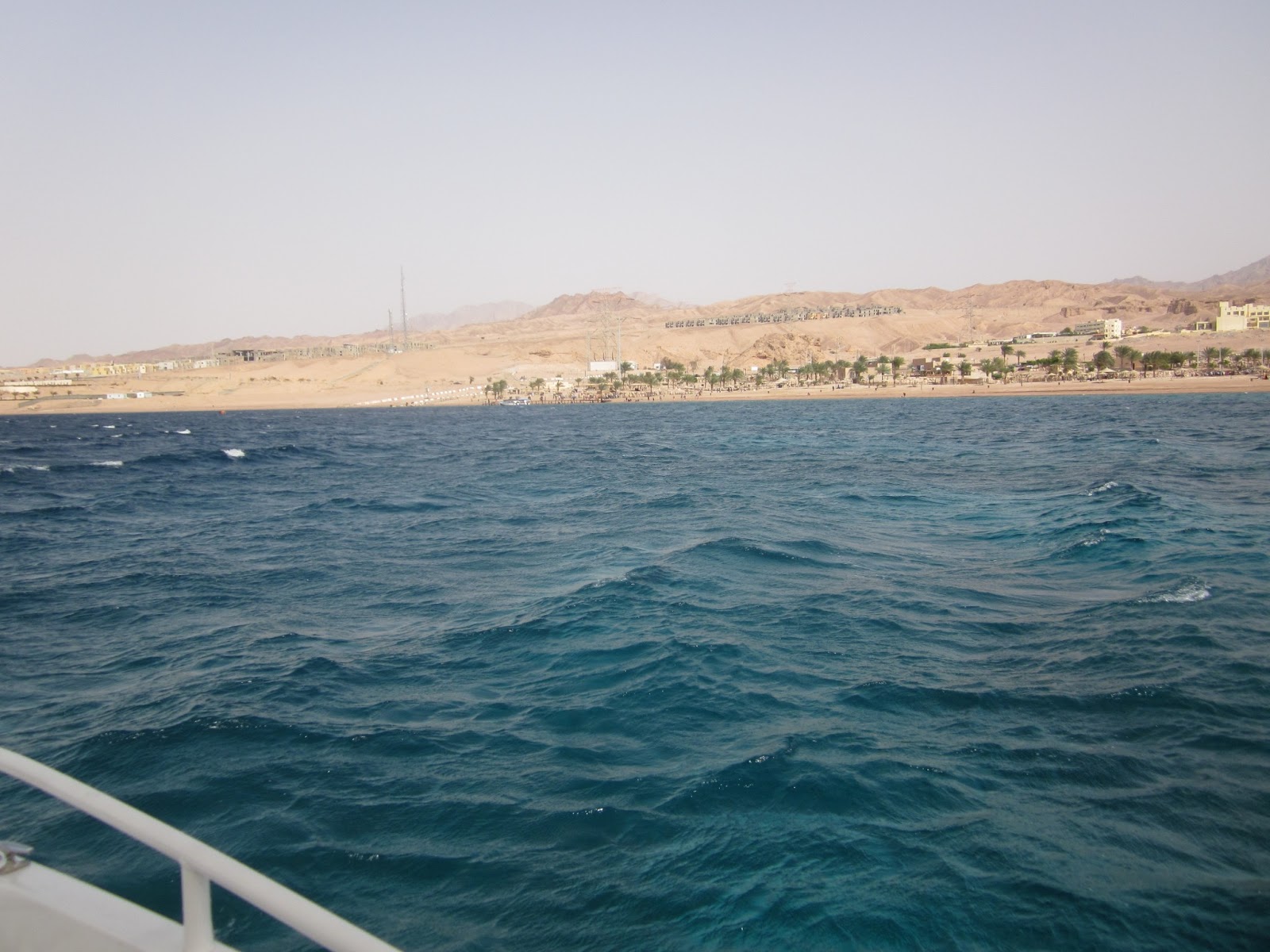
Aqaba, where the Arab nation was once thinkable

Aqaba, with Sinai on horizon (Alex Rowell)

The bus ride from the Jordanian capital to the southern port city of Aqaba is long enough to get a dedicated cigarette break half-way through. Having nearly asphyxiated to death the night before on a plethora of substances inhaled (largely though not entirely at second-hand) in Amman’s fine Dionysian establishments, I declined to join my fellow passengers outside on the flat, grey-beige rock plains of Jordan’s western desert. I did, however, have reason beside a hangover to feel a marked jump in the blood pressure: a sudden first glimpse, just a few hundred metres away, of the old Hejaz railway; built by the Ottomans to ship pilgrims from Constantinople to Mecca, and later blown apart by Arab nationalists fighting alongside a certain Thomas Edward Lawrence.

It’s probably healthy for Brits in the Arab world to avoid Lawrencian aspirations, if only for the cruel fate to which he eventually delivered the good men who had given him their trust and respect (to say nothing of their blood). Yet one cannot avoid – or at any rate, I couldn’t avoid – a shiver as we rolled past the Petra and Wadi Rum he had so admired, nearing the destination whose very name seems to have bewitched and tormented him.

The conquest of Aqaba was the first major victory for the Arab Revolt against the Ottomans in World War I, and certainly the greatest personal one for Lawrence. In his memoir, Seven Pillars of Wisdom, he writes early on of the

Importance of Akaba [sic], the only Turkish port left in the Red Sea, the nearest to the Suez Canal, the nearest to the Hejaz Railway, on the left flank of the Beersheba army […]1

The city proceeds to dominate the next hundred or so pages as he agonises over how best to take it and salivates over the glories it will bring (“in so vital a matter as Akaba we could not afford a mistake”; “Akaba spelt plenty in food, money, guns, advisers”; “I still saw the liberation of Syria happening in steps, of which Akaba was the indispensable first”; “We had one objective only, the capture of Akaba”2).

The problem the Arabs faced was that a naval approach would swiftly succumb to formidable Ottoman defences embanked in the spiky mountains just a couple of miles inland (aqaba in Arabic – عقبة – means “obstacle”, thus the self-deprecating Jordanian joke about their country being one whose only port is an obstacle, and whose sea is dead). Lawrence’s audacious solution was to take a 600-mile detour through the desert, attacking the Ottomans by land from the east. It proved successful – “The enemy had never imagined attack from the interior, and of all their great works not one trench or post faced inland”3 – and on July 6, 1917, the Ottomans surrendered with no casualties on either side.

The forbidding mountains behind Aqaba, within which the Ottomans built their defences (Alex Rowell)

Lawrence’s description of entering the city reads like Hunter S Thompson recalling a heavier-than-average weekend:

For months Akaba had been the horizon of our minds, the goal: we had had no thought, we had refused thought of anything beside. Now, in achievement, we were a little despising the entities which had spent their extremest effort on an object whose attainment changed nothing radical either in mind or body.
In the blank light of victory we could scarcely identify ourselves. We spoke with surprise, sat emptily, fingered upon our white skirts; doubtful if we could understand or learn whom we were. Others’ noise was a dreamlike unreality, a singing in ears drowned deep in water. Against the astonishment of this unasked-for continued life we did not know how to turn our gift to account. Especially for me was it hard, because though my sight was sharp, I never saw men’s features: always I peered beyond, imagining for myself a spirit-reality of this or that: and to-day each man owned his desire so utterly that he was fulfilled in it, and became meaningless.4

I wager that few visitors to Aqaba today feel quite so strongly about their arrival, but much remains of the “unassailable base”5 that the Arabs then made of the city, whence they proceeded to support Allied forces in the Sinai, Palestine and eventually Syria. The Mamluk-era fortress, for example, next to which Emir Faisal (later King Faisal of Iraq) made his home, is perhaps nowadays the city’s preeminent tourist attraction. Equally striking, though, is the 130-metre-tall flagpole erected in the adjacent Revolution Square, undoubtedly visible from the nearby Israeli and Egyptian resorts of Eilat and Taba, respectively, on the other side of the Gulf of Aqaba.  Unique (as far as I know) among such structures, it bears not the Jordanian flag but the old flag of the Arab Revolt – the same flag that briefly flew in Damascus and Beirut until the 1920 Battle of Maysalun crushed the grand dream of the Arab nation once and for all.

Aqaba fortress (Alex Rowell)

The Arab Revolt flag, 130m above Revolution Square to the west of the fortress (Alex Rowell)

Indeed, if Aqaba is a relic of Arab nationalism, it is a distinctly bittersweet one, given that the city today is more suggestive of Jordan’s accommodation with the Balfour Declaration. While tourists might marvel at the sight of Jordan, Israel and Egypt all at once (with Saudi Arabia just around the corner), this certainly wasn’t what Faisal’s men had in mind in 1917.

Recall that the Brits made no fewer than three simultaneous, and mutually incompatible, promises of Arab land during the war: the first to Faisal’s father, Sharif Hussein of Mecca, in 1915; the second to themselves and the French in 1916; and the third to the World Zionist Organization in 19176.Of the three, only the last remains implemented today, and nowhere more so than in Aqaba, where Israeli weekenders sunbathe scarcely a kilometre away, secure in the knowledge that neighbouring Arab governments are bomb-scanning their own citizens to protect them. It’s a rather different story on the Gazan and Lebanese borders.

Not that the Israelis can rest entirely easy. At least five rocket attacks on Eilat have been reported in the last three years, all of them seemingly fired by jihadists in the Sinai, possibly though not necessarily in coordination with Hamas. Extremely inaccurate, they have so far failed to actually hit any Israelis – indeed the only death in the recent series occurred in 2010 when one missed Israel altogether, landing by the Intercontinental Hotel in Aqaba, killing a Jordanian cab driver.

Israeli resort of Eilat as seen from Aqaba (Alex Rowell)

Eilat was hit by a “successful” suicide bombing in 2007, though, when a 21-year-old from Gaza killed himself along with 3 Israelis in a bakery. And in the heady days of Abu Musab al-Zarqawi – the Jordanian warlord and founder of al-Qaeda in Iraq (AQI) – a barrage of rockets launched from Aqaba itself killed a Jordanian soldier after missing the two US navy ships they’d been aimed at. That was eight years ago, and Zarqawi has since been killed by the Americans, but the emergence now of the AQI spinoff Jabhat al-Nusra next door in Syria is starting to put the wind up a few Jordanians who believe they’ve seen this film before.

Not an entirely sleepy neighbourhood, in other words, but as I say this is not because of any ill-will between Amman and Tel Aviv. Quite to the contrary, the Knesset’s chief antagonists – Islamists and Palestinians – are, to lesser extents, the Hashemite monarch’s too. It’s perhaps more accurate, then, to say Aqaba (and Jordan as a whole) represents not so much the defeat of the Arab Revolt as the severe downsizing and tribalisation of it: King Abdullah II, after all, being the great-great-grandson of Sharif Hussein (as well as the great-grandnephew of Emir Faisal). Ironic as the giant flag in Revolution Square might seem in that light, it also serves a nobler, if unintended purpose: reminding the visitor that the Arabs’ title to the surrounding land came first, and was only dishonourably revoked by callous British imperial duplicity.

Postscript: My girlfriend protests that I kill the joy of our weekend holidays by turning them exclusively into historical-political essays. I ought to add, then, that the sea at Aqaba could not be less “dead”, with its dozen or so easily accessible coral reefs, complete with dolphins, turtles, sharks, eels, and kaleidoscopic galaxies of fish. A scuba dive or at least a snorkel is a must while you’re there. A stroll along the waterfront by the old port – where glass bottom (or indeed “glass baton”) boat rides can be acquired – is also good fun.

For 25JD ($35), a boat like this will take you snorkelling for an hour around innumerable coral reefs (Alex Rowell)

1 Lawrence, T.E., Seven Pillars of Wisdom: A Triumph (1922), 2008 Vintage Classics paperback edition, pp. 172-3
2 Ibid., respectively: p. 180; p. 281; p. 282; p. 297
3 Ibid., p. 317
4 Ibid., p. 322
5 Ibid., p. 321
6 For an excellent history of this, see Eugene Rogan, The Arabs: A History (2012), Penguin revised second paperback edition, chapter 6

Tuesday, March 12, 2013

Zionists and anti-Zionists finally agree (that Syrian rebels are "terrorists")

[Originally posted at NOW]

There was a time, not very long ago at all, when being called a “terrorist” by the Israeli chief of staff earned one the instant respect and support of the anti-Zionist intelligentsia. One man’s terrorist is another man’s freedom fighter, after all, so what nobler title could there be for the warrior for Palestinian liberation than this ultimate vilification, this summa of demonization in the enemy’s eyes? Indeed, to disavow “terror”, as Yasser Arafat did in 1988, was nothing less than craven capitulation to Empire and shameful treachery to the cause.

Alas, the “anti-imperial” left has undergone strange contortions in the last two years, and an unlikely consensus is beginning to be forged between the bitterest antagonists. Already reviled by the likes of As’ad AbuKhalil as “armed fanatical gangs […] inheritors of Bin Laden […] terrorists and not revolutionaries”, the Syrian opposition was later partly designated a "terrorist organization" by the White House. This was ostensibly on the grounds that the brigade in question, Jabhat al-Nusra, was deliberately killing civilians, but on Monday State Department spokeswoman Victoria Nuland even condemned as “terrorism” a rebel attack on Syrian regime soldiers, to whom she inexplicably referred as “noncombatants”. Reporters in the room at the time must have briefly wondered if they were not at a Russian Foreign Ministry press conference.

Yet equally interesting on Monday was Israeli military chief Benny Gantz’ warning that “the terrorist organizations [in Syria] are becoming stronger on the ground.” Of particular concern to Gantz was that Bashar al-Assad’s most dangerous weapons “could fall into the hands of these terrorist organizations” (draw what inference you will about the hands they’re currently in).

How extraordinary to see the Israeli army, the Arab “left” and the American administration singing in such resonant harmony. Evidently, whatever their differences over Gaza, the settlements and the occupation, they battle as happy comrades in this latest round of the War on Terror.

Thursday, March 7, 2013

Jordan's multiplying Syria woes

[Originally posted at NOW]

While the international community often singles out Lebanon as the principal victim of so-called “spillover” from the armed conflict in Syria, less discussed but arguably no less dramatic are the transformations the two-year-long war is effecting on its southern neighbor, Jordan.

Like Lebanon, the Hashemite Kingdom has officially pursued a policy of neutrality in the Syrian conflict, calling for a “diplomatic and peaceful solution to the problem.” Yet despite such caution, the war next door threatens to cripple the already-burdened country with a plethora of serious humanitarian, security, and socioeconomic strains.

These are perhaps most evident in the now-notorious Zaatari refugee camp, erected last summer in the desert east of the city of Mafraq, near the Syrian border. Originally intended for 60,000 Syrian refugees, it now houses over 146,000 in fabric tents, with thousands of new arrivals every week.

Living conditions inside are very poor, with poverty rife and scant access to basic food, water, and healthcare needs, according to an aid worker in the camp NOW met in Amman over the weekend. Between 7 and 10 babies are born inside the camp every day – sometimes dying just days later. Infectious diseases such as polio and malaria are on the rise, and reportedly spreading beyond the camp’s borders. So desperate are some families for money, said the aid worker, that they are selling their daughters as brides for as little as JD100 ($140) and even prostituting them for JD10 ($14).

Accordingly, frustration among residents is increasingly leading to organized protests and even violence, sometimes met with responses from Jordanian security forces. Tensions and fears are further stoked by Syrian mukhabarrat, or regime informants, who are widely believed to have infiltrated the camp.

Yet Syria’s shadow over Jordan extends far beyond Zaatari, and not just because there are an additional 270,000 refugees elsewhere in the country (projected to total 1 million by year-end). The refugee issue aside, the conflict presents a significant potential security threat to the Kingdom, according to Jumana Ghneimat, editor-in-chief of Al-Ghad newspaper.

“The situation here is very sensitive and very dangerous,” Ghneimat told NOW. “There are Salafist groups here in Jordan that are going to Syria. About 300 Jordanian Salafists are fighting in Syria now. This is a big problem for Jordan that could repeat the Iraq scenario. If you remember, Jordanian Salafists went there and then returned and made many problems here in 2005,” a reference to the series of hotel bombs in Amman that killed some 60 people, and were later claimed by al-Qaeda in Iraq, led by the Jordanian Abu Musab al-Zarqawi.

“So maybe when they’re finished in Syria they’ll come back here and conduct new operations,” said Ghneimat. A leading Syrian opposition brigade, Jabhat al-Nusra, was designated a terror organization by the United States for its alleged affiliation with AQI.

Additionally, of perhaps more immediate concern is the drain on the economy, which faces an unprecedented crisis. For the first time, Jordanians may face regular electricity blackouts this summer, à laLebanon. “It’s a possible scenario,” said Ghneimat. “If they don’t increase the electricity output, it might happen. It already happened once or twice last year, when we didn’t have so many refugees, so what do you think will happen this year, or the next?” Such cuts could potentially be widely disruptive, Ghneimat added, since Jordanians do not have easy access to generators, as do the Lebanese.

Water is a similar concern. “Jordan is the third poorest country in the world for water. We already face a serious water problem. To provide now for more than 400,000 Syrians is a huge [challenge],” said Ghneimat.

These shortages in turn add strain to the government’s budget, which currently subsidizes such commodities. “The refugees put certain pressures on the infrastructure, consuming water and electricity which are subsidized,” said Dr. Yusuf Mansur, economist and CEO of Envision Consulting Group. They also increase “demand for education, pressure public schools, and public healthcare, when it’s available.”

Mansur argues, however, that there are also economic benefits to the situation. “It’s a mixed bag,” he told NOW. “In terms of tourism, those in countries like Lebanon who used to go to Syria will now opt for the safer retreat of Jordan. In terms of investment, as well, it has diverted some capital to Jordan, because other countries were more affected by Syria than us.”

As for disruption to trade routes through Syria, “this is beneficial for the Aqaba port,” said Mansur. “From Aqaba goods can go through the Suez Canal and then the Mediterranean.” Another possibility is re-routing land exports and imports through Iraq, he added.

However, potential economic upsides notwithstanding, there appears to be little prospect of overall improvement in a situation fuelled by a war whose viciousness shows no sign of abating. When NOW returned to Beirut from Amman on Sunday, it was on one of the first planes to take a new route south and west over Egypt’s Sinai Peninsula, approaching Lebanon from the Mediterranean. The airline announced the change had been made to avoid the previous path over Syria in the interest of “the safety of passengers.” For the time being, it seems, Jordan is destined to remain what the Zaatari camp aid worker called “a gas tank not far from a lit match.”

Thursday, December 6, 2012

Syrian rebels gain, but for how long?

[Originally posted at NOW Lebanon]

The resignation of Syrian Foreign Ministry spokesman Jihad Makdissi on Monday is just one of a series of recent setbacks for the embattled regime of President Bashar al-Assad. The news follows a week of unprecedented military victories for rebel forces, including the shooting down of two regime aircraft in as many days, a pledge by NATO to deploy Patriot surface-to-air missiles along the Turkish-Syrian border, and a diplomatic breakthrough that could see European nations arming the opposition by March 2013.

At the same time, the regime has been bombarding the Damascus province in a thus-far successful effort to repel an opposition advance into the capital, while also gaining on rebel positions in the Aleppo region. Perhaps most significantly, US officials claimed Wednesday that the regime had loaded aerial bombs with sarin, a deadly nerve gas, following a second warning from Washington that the use of chemical weapons would prompt military intervention.

On balance, several analysts argue the momentum has shifted in the rebels’ favor, particularly in light of their newly acquired surface-to-air weaponry. “Assad has been relying on air power to keep rebels pinned in their positions. Their ability to challenge this state of affairs has given them more confidence and enabled them to carry out bolder operations, as we are currently seeing in Damascus, Aleppo, Deir az-Zour and Daraa,” said Ammar Abdulhamid, an exiled Syrian activist and fellow at the Washington, DC-based Foundation for the Defense of Democracies. “The rebels are gradually breaking the stalemate and gaining the upper-hand […] A de facto no-fly zone is being created,” he told NOW.

Yezid Sayigh, senior associate at the Carnegie Middle East Center in Beirut, agrees that “the rebels have been regularly and steadily improving their tactical performance since the end of May.” He cautions, however, that the regime “is still very capable of” using its air force and remains “very much in command of what forces it has left—and these are not insignificant forces.” Accordingly, he argues that “what looks like quite dramatic and swift rebel advances and regime losses” may instead be a move “toward a new stabilized stalemate around a line running broadly from the Turkish border through Aleppo to Deir az-Zour, versus the regime holding onto Damascus and the Lebanese border to Homs, Hama and then around to Latakia.”

Moreover, it is unclear how long the rebels’ surface-to-air missile (SAM) stocks can last. “Rebel operations and fighting capabilities have always been undermined by an unsteady flow of arms,” said Abdulhamid. “That a portion of the surface-to-air missiles in rebel possession seems to have been gained from looting the military bases that rebels conquered and not from external suppliers” means that “depletion is a serious concern.”

Opposition activist Maher al-Esber, however, believes the rebels have already seized sufficient quantities. “They took missiles from more than one place,” he told NOW. “Practically if, [for example], you have 50 missiles and [the regime] has 100 planes, you achieve complete deterrence.” Current estimates put the rebels’ SAM stockpile at around 40, against more than 300 attack aircraft.

Elsewhere, rebel gains in the north and northeast have sparked concerns about the prominence of Jabhat al-Nusra, a secretive brigade of both Syrian and foreign jihadists that has carried out dozens of suicide attacks in the last year—sometimes killing civilians—and reportedly played a decisive role in recent battles. In a rare interview this week with the Telegraph, a member of the group admitted that some of his comrades “hate the West and all non-Muslims” and “want to attack churches.”

According to Abdulhamid, while “the growing size and involvement of Jabhat al-Nusra is pretty worrying,” it remains heavily outnumbered by non-jihadist rebels. “Jabhat has its allies among rebels who share its vision for an Islamic state, but it has more enemies, as most rebel groups refuse to endorse [this] option.” Moreover, Abdulhamid foresees “clashes between Jabhat members and other rebel groups” taking place “after or even during the liberation of Damascus, [which] will ripple elsewhere in the country.”

As for the fears of chemical weapons use by the regime, Sayigh believes it is essentially a regime bluff. “[Assad] has been using the chemical weapons issue to sort of play a little game, to say ‘Look, we can make trouble, and equally we can prevent that trouble. If you want these to be secure, you need us, so they don’t fall into bad hands, i.e., Islamists.’”

Abdulhamid, however, argues the threat is credible. “The psychopathic tendencies of Assad and his inner circle have been amply documented by now. We cannot put anything beyond them. For all their manifest corruption, we are dealing here with people who seem to believe their own lies […] Assad might decide that he is a dead man no matter what happens, so he might as well die as a ‘hero’ of the resistance to imperialism and Zionism.”

Amani Hamad contributed reporting.