Showing posts with label Russia. Show all posts

Thursday, July 20, 2017

UK Syria vote: Who MPs should (and should not) be listening to

[Originally published by Now Lebanon on 2/12/2015]

British MPs should consult Syrians, not dubious Western ideologues, on whether or not to bomb ISIS in their country.


In Ian McEwan’s novel Saturday, set in February 2003, the neurosurgeon Henry Perowne is discussing the day’s big event — the million-strong march in Hyde Park against the coming invasion of Iraq — with his “newly adult” daughter, who’s just returned, flushed with righteous vivacity, from the jubilant scene.

The liberal Henry doesn’t, in fact, support the war, but when his daughter asks, slightly too judgmentally, why he hadn’t joined the enlightened masses on the streets, a friendly argument breaks out that then turns into a less-friendly argument, eventually leading Henry to realize what it is that makes him uneasy about the demonstrators:

“Let me ask you a question. Why is it among those two million idealists today I didn’t see one banner, one fist or voice raised against Saddam?”

“He’s loathsome,” she says. “It’s a given.”

“No it’s not. It’s a forgotten. Why else are you all singing and dancing in the park?”

This has always struck me as an insight of the highest moral clarity, and it bears revisiting as the British parliament meets today to vote on extending Royal Air Force strikes against ISIS in Iraq (already approved by parliament last year) to include ISIS targets in neighboring Syria as well. Today, as in 2003, any serious consideration of whether or not to intervene must begin with the acknowledgment that both options are terrible. MPs voting against the motion put forth by David Cameron’s cabinet must understand that they are doing a favor to the rapists of children, the tyrannisers of Arab and Muslim civilians generally, and the butchers of British tourists, French concert-goers, and Egyptian Christians, just as MPs voting for the motion must concede that opposition leader Jeremy Corbyn is probably right to say “we are going to kill [innocent] people in their homes by our bombs.”

Both options entail further horror and misery for civilians. There will be blood on British MPs’ hands whether they vote for or against. Neither course should be taken, then, without the requisite degrees of discomfort and remorse — there can be no singing and dancing in the park. The people who must be morally distrusted right away, in other words, are those for whom the decision comes easily.

These include, on the (purported) left, the anti-war absolutists, who care not the slightest for the welfare of Syrian civilians, or even for their opinions. Perhaps best represented in Britain by the questionably-named Stop the War Coalition, they made this clear last month when they prevented Syrian activists from speaking at a panel discussion on intervention in Syria, heckling and then calling the police on a small group who turned up hoping to have a say on the fate of their own country. To call these groups ‘anti-war’ is in fact much too kind, for they have no problem with war in Syria per se as long as it can be used against Downing Street. They are the sort who would have told you (as indeed they might still) that the most dangerous man in Europe in 1939 was Winston Churchill.

A closely related faction are those who actively support war in Syria — who expend column inches and public speaking hours defending and advocating it — when it’s carried out by regimes Britain opposes. Of these there could be no better example than Patrick Cockburn, the journalist Corbyn invited to give Labour MPs a final pep talk before parliament opened this morning. When 10 weeks ago Russia began its own intervention in Syria — which has since killed a number of rebels and a higher number of civilians, but conspicuously few ISIS fighters — Cockburn penned an op-ed titled ‘Why We Should Welcome Russia’s Entry Into Syrian War.’ Moscow’s air strikes on rebel positions and residential homes “could have a positive impact,” Cockburn explained, even helping in “de-escalating the war.” Needless to say the prospect of Britain following Russia’s lead, however, is another matter entirely.

“Based on wishful thinking and poor information,” Cockburn said in his briefing Wednesday, Britain is stumbling into the unknown “without a realistic policy to win” against ISIS. What might a realistic policy involve? “If ISIS is really going to be destroyed, it is difficult to see how the US and UK can avoid having some degree of co-operation with the Syrian army,” Cockburn wrote two weeks ago. He further applauded the “clear-sighted” remarks by former British Army head Gen. David Richards that Assad and even “Hezbollah and their Iranian backers” should be welcomed into the Coalition’s fold. In this, the ostensibly left-wing Cockburn is on common ground with such right-wingers as UKIP leader Nigel Farage and the Conservative chair of the Foreign Affairs Select Committee, MP Crispin Blunt, both of whom have opposed fighting ISIS without an accompanying entente cordiale with Damascus.

If these are some of the voices MPs would do well to ignore when voting Wednesday, where might they turn instead for valuable insight? A sensible starting place would surely be those Syrian civilians who stand to be most directly affected by the dispatch of Tornado GR4s to the skies above the caliphate.

‘Raqqa Is Being Slaughtered Silently’ (RBSS) is a group of extraordinary media activists working surreptitiously from inside ISIS’s Syrian capital to bring the reality of life under the jihadists to an outside world that would otherwise have no information beyond the meticulously-doctored propaganda released by the caliph’s media team themselves. Living under perennial threat of discovery and death (two of their colleagues in south Turkey were tracked down and beheaded by an ISIS agent in October), RBSS have the most to gain from an effective intervention against ISIS and, equally, the most to lose from a botched one. One of their members, going by the pseudonym Tim Ramadan, told me Wednesday he was prepared to take a bet on the former outcome.

“We’re for any decision to eradicate Daesh [ISIS] and Assad, and to protect civilians,” said Ramadan. “We have trust in the British government, from its stance alongside the Syrian revolution, that it will place the protection of civilians among its priorities.”

When I replied that others, such as the Syrian Observatory for Human Rights’ Rami Abdulrahman, object to strikes on the grounds that ISIS operates among the civilian population, making the killing of innocents inevitable, Ramadan disagreed.

“There are Daesh camps and warehouses and convoys that move in broad daylight, far from civilians. For example, France carried out almost 30 strikes in a single night that didn’t hit any civilian; all of them focused on Daesh targets. Britain, too, has the capability to do that.”

Which is not to say Ramadan’s opinion is universally shared. Other Syrian democracy activists on the ground, such as the Aleppo-based Zaina Erhaim, have come out against British strikes. The Syria Campaign, a group that works tirelessly to remind the world that Assad remains by a considerable margin the greatest killer of civilians in Syria, argues that “Bombing ISIS is not the answer” — a view shared by some leading Syrian analysts, including Hassan Hassan.

None of these people are pacifists or Corbynistas. What they typically object to is not the principle of intervention, but rather the prospect of a strategically stunted intervention that fails to account for Assad’s role in getting ISIS to where it is today.

“If I went to the UK parliament to make a speech, the first thing I would say is ask them to remove the cause, which is Assad, not the symptom which is ISIS,” an exiled Raqqa resident told the Guardian last week. “Hundreds of thousands of people died in the last few years, and no one came to bomb Damascus.”

That, of course, was in small part because of a British parliament decision against punishing Assad for murdering over 1,000 men, women and children with weapons of mass destruction (which, incidentally, he has “continued to use” as a matter of “routine,” according to delegates at this week’s Organisation for the Prohibition of Chemical Weapons annual meeting). Today MPs face another decision, and if the one they make turns out in the course of time to be the wrong one, they will at least be able to say they took it in good conscience if they listen — rather than close their ears — to the voices of what ought to be their Syrian allies.

Sunday, March 1, 2015

Quiet on the anti-interventionist front

[Originally posted at NOW]

Is it just me, or have America’s latest killings of jihadists in Iraq generated less resentment – not to say rage – than similar efforts typically did in the previous decade?

A glance at the reaction – or, rather, lack thereof – from anti-interventionist circles over the past few days suggests that is indeed the case. Barring the sheer crackpottery of such outfits as Britain’s Stop The War, which said it was “vital that we oppose” the operation that rescued over 20,000 Iraqis from certain death at ISIS’ hands (and which, when it’s Russia rather than America doing the invading, turns out to be remarkably flexible on the principle), there simply has not been much noise made about it. Even so cacophonous a demagogue as George Galloway hasn’t been able to denounce the strikes per se, grumbling instead (on Russian state TV) that they’ll be ineffective because the Americans “sat on their hands” the whole time ISIS was growing – a criticism that, he apparently doesn’t see, works at the expense of the anti-interventionist position.

Why, then, this quiet? A generous reading might point to the highly idiosyncratic circumstances of the Mount Sinjar case – easily identifiable militant locations, clearly segregated from a purely civilian populace facing unambiguous and imminent genocide. It’s a moral philosopher’s hypothetical example brought to life – if ‘Responsibility to Protect’ doesn’t apply here, it doesn’t apply anywhere.

Yet there is likely a second reason, plainly (if inadvertently) detectable in Galloway, which is that many anti-interventionists have for three years now energetically premised their case precisely on their enmity toward ISIS and its predecessors, who (having been the “resistance” in Iraq back in the 2000s) then became the Zionist-imperialist traitors against the “fortress of Arab dignity” that is the Assad regime. That’s why neither Lebanon’s Hezbollah nor Tehran have made any public condemnations of the operations – call someone a “takfiri” or “terrorist” once, and it’s not easy to complain when someone starts killing them. How embarrassing it must be for the “anti-imperialists” to suddenly find Empire fighting on their side.

Thursday, January 23, 2014

Galloway's attack on Nawaz plumbs new depths of hypocrisy

[Originally posted at NOW]

I have twice had the honor and pleasure of interacting with Maajid Nawaz; first when he was kind enough to sign my copy of his remarkable memoir, Radical, at the 2012 Edinburgh Book Festival; and second when I interviewed him by phone shortly afterward in NOW’s own pages. On both occasions the winsome charisma and quick intelligence for which he’s renowned were in full evidence.

We didn’t agree on everything – he is a believing Muslim who opposed any kind of intervention in Syria – but these facts, if anything, only make it more outrageous that he should have become the target this week of a takfir campaign launched by Islamist fascists after his tweeting of a cartoon along with the words: “This [...] is not offensive & I’m sure God is greater than to feel threatened by it الله أكبر منه.” The former Hizb ut-Tahrir zealot turned counter-Islamist democracy activist, who recently succeeded in convincing the head of the anti-Muslim ‘English Defence League’ skinhead mob to step down, has now received “credible” death threats, and has felt compelled to issue a statement of “regret.”

Loathsome as this assault is, it’s perhaps only to be expected from the Islamists, who are at least open about their utter rejection of “godless” liberalism and “man-made” democracy. In a sense, their behavior here is fitting, even reassuring (to discover anew that one has made an enemy of the theocratic far-right is, or ought to be, a source of satisfaction). Much less stomachable, however, was the solidarity offered to the scrofulous thugs by MP George Galloway, who took it upon himself to tweet:

“No Muslim will ever vote for the Liberal Democrats anywhere ever unless they ditch the provocateur Majid [sic] Nawaz, cuckold of the EDL.”

It’s just astounding what the man gets away with. Bad enough that Galloway – who is actually a sectarian Roman Catholic, who argues against Scottish independence because the resulting peninsula would contain too many Protestants – supposes himself eligible to speak on behalf of “Muslims.” Far worse that, in so doing, he equates all “Muslims” with the crackpot fringe minority represented by Nawaz’ would-be-murderers (precisely the sort of vile smear that was, incidentally, the stock-in-trade of the EDL).

Yet it’s his rancid hypocrisy that most churns the gut. Galloway has spent the best part of the last three years defending Bashar al-Assad, whose merciless regime has slaughtered tens of thousands of Muslim civilians, as an enlightened and secularist bastion against the “takfiri fanatics” and “beasts” of the Syrian opposition. America, he now tells us, is “in bed with al-Qaeda.” But whenever Galloway is back home, it’s precisely the brethren of those very same takfiris and fanatics who are his dearest comrades. Indeed, he’s even dabbled in the takfir business himself, slandering his Muslim rival in a recent by-election as a hopeless alcoholic, and thundering thuggishly that “God KNOWS who is a Muslim. And he KNOWS who is not […] I, George Galloway, do not drink alcohol and never have. Ask yourself if the other candidate in this election can say that truthfully.”

Then again, there’s a warped sort of consistency here (and not just because, before Galloway started disliking al-Qaeda, he was lauding them as a “resistance” force in Iraq). Much like America’s televangelist millionaires, one never quite knows whether ‘Gorgeous George’ sincerely believes the things he says, or if he’s just doing too well for himself to stop now. There’s reason to think it’s the latter; in other words that he’s found a highly lucrative niche as the go-to propagandist for whichever mass-murderer is the international community’s bogeyman-of-the-day.

For example, a 2007 British parliamentary inquiry found “strong circumstantial evidence” that Galloway received hundreds of thousands of dollars from the Saddam Hussein regime; money siphoned out of the UN Oil-for-Food Programme that was, incidentally, supposed to buy relief for Iraqi civilians rendered destitute by years of international sanctions.

And since becoming an MP again in 2012, Galloway has been forced to disclose some other fascinating sources of income, including at least $119,000 a year for his twice-monthly show on the staunchly pro-Assad al-Mayadeen TV station here in Beirut, as well as “several £20,000 ($33,000) payments for presenting programmes on Press TV,” the Iranian state channel, from which platform he memorably declared last year’s chemical weapons attack outside Damascus to have been the work of al-Qaeda in cahoots with Israel (and then lied about it in parliament). No doubt impressed with what they saw, and realizing the potential value of his services, the Putin regime has since given him a weekly slot on their RT channel, in return for as-yet-untold sums.

But at the same time, there’s also reason to believe that what he says comes largely from genuine conviction. He certainly goes above and beyond the call of duty of a mere mercenary. His record on LGBT rights, for instance, is notoriously shady – he both denies that Iran executes gays and says the ones it does execute are either rapists or pedophiles. Rape itself, as it happens, is something he’s willing to pardon as long as the right people are doing it – commenting on the Julian Assange allegations, Galloway shrugged that “not everybody needs to be asked prior to each insertion.” And his support for censorship has been expressed repeatedly and unambiguously: “Of course in this country there’s freedom of speech, but it cannot be an unlimited freedom of speech and other freedoms must trump it, including the freedom not to be terrorized in your own home, not to have your prophet insulted, your religion insulted.”

Perhaps these too are purely cynical statements, calibrated solely to win votes and fatten pockets. But I’m tempted to think Galloway is also one of those authoritarians still lurking on the ostensible left for whom the very idea of liberal democracy is a bourgeois abomination. There’s far more “revolutionary” excitement, after all, in the Castros and Chavezes and Saddams of the world, whose despotism, no matter how bloody, can always be excused for the good of the cause (even when “the cause” is nothing more than petty dynastic perpetuation). Ultimately, for Galloway no less than the Islamists, Nawaz’ original sin was committed the moment he put down the black-and-white flag of the caliphate, and turned his back on totalitarianism tout court. It’s incumbent on all who wish to live neither in Stalinist nor Salafist serfdom to offer their full support to Nawaz, and their full contempt to his adversaries.

Tuesday, September 10, 2013

What happened to Noam Chomsky on Syria?

[Originally posted at NOW]

It seems I owe Noam Chomsky a belated apology. In the days following his summer sojourn to Lebanon, I wrote a rather cross rebuke of his description of Hezbollah’s intervention in Syria as “understandable;” an adjective I thought (and still think) left slightly too much room for interpretation as an endorsement. At the time, some suggested he meant it more in the sense of ‘comprehensible,’ rather than ‘pardonable,’ to which I replied that the linguistics professor wouldn’t have been so evasive in denouncing, say, Saudi intervention in Bahrain.

I now learn, thanks to a subsequent interview dug up by Asaad AbuKhalil, that the optimists were right. Challenged by Syrian playwright Mohammed al-Attar specifically on the word “understandable,” Chomsky immediately backpedalled: “There’s a difference between understanding the reasons for intervening and excusing it. To be clear: nothing can justify Hezbollah’s involvement [in Syria].”

This is certainly strange talk from the man better known for defending Hezbollah’s right to command a private Islamist militia (a stance he iterated publicly after a friendly meeting with Nasrallah in 2006), and more generally lauding the Party of God as the darling of Lebanese secularism.

Indeed, the Attar interview reveals a transformation in Chomsky’s thinking on Syria in several respects. To see how, first rewind to March, when he was advocating straightforward anti-interventionism to The Guardian:

“I tend to think that providing arms is going to escalate the conflict. I think there has to be some kind of negotiated settlement.”

This seemingly remained his view when interviewed by The Daily Star on 14 June:

“The only slim hope that I can see is the Geneva-style negotiated solution […] Any kind of militarization is going to widen that conflict.”

And yet, only two days later, he was telling Attar that should Putin fail to undergo his long-awaited humanitarian epiphany, arming the opposition would only be the natural back-up plan:

“We all want to force Assad to the negotiating table and from there, to resign, but the question is how to achieve this? The first way to do this is to supply the opposition with arms […] The second approach is to go to Geneva with the cooperation of the major powers, including Russia, and force the regime to accept a truce […] I believe you should choose the negotiating track first, and should you fail, then moving to the second option becomes more acceptable.” [Italics added.]

Also remarkably, given the vitriol routinely heaped upon the rebels by the ‘Hands Off Syria’ crowd, the Professor actually spoke quite favorably of the opposition brigades, even comparing them to the victims of Vietnam:

“I don't think the Syrians made a choice [to arm]. It happened in the wake of the Assad regime’s repressive response. Syrians could either have surrendered or taken up arms. To blame them is akin to saying that the Vietnamese made a mistake responding by force when their US-backed government started committing massacres. Sure, the Vietnamese made a choice to arm themselves, but the alternative was [to] accept still more massacres.”

(Amusingly, this comparison infuriated AbuKhalil, who wrote last week of being “quite displeased” with Chomsky’s “woefully ill-informed” analysis, quite out of step with that of “real leftists” such as himself. Like a bad drunk revealing a repressed bigotry, AbuKhalil even lapsed into outright Assadism, scolding Chomsky for omitting to mention “the role of Turkey, Saudi Arabia, and Qatar in forming armed militant groups […] prior to the eruption of the Syrian uprising.” It must have stung when, asked by Attar what to do with those for whom the whole rebellion is self-evidently an imperialist scam, Chomsky replied: “Just disregard them. They are insignificant.”)

To be clear, Chomsky isn’t about to start scheduling power breakfasts with John McCain. He said last week any military strike on the regime without UN authorization would constitute a “very serious war crime.” Yet it’s clear nonetheless that he’s breaking ranks with most of the pseudo-left on Syria overall, and it’s worth asking why.

One clue may lie in the otherwise-unreported meeting Chomsky had in Beirut, according to Attar, “with a group of independent Syrian media activists, aid workers and individuals active in cultural and economic spheres.” It’s fair to assume they were not discussing the glories of the October War.

Yet even before that, for more than a year there’s been a key divergence between Chomsky and most of his comrades regarding Israel’s view of Assad, and I think it’s this that’s been decisive. While the likes of Ibrahim al-Amin and George Galloway have championed Damascus as Zionism’s worst nightmare (and concurrently smeared the opposition as Likudniks with Qur’ans), Chomsky has seen through this pantomime, correctly noting that Tel Aviv was never as unhappy with Assad as all that, and certainly wouldn’t be thrilled to see what the IDF itself has called “the terrorists” running the show in his place.

Thus freed from the poisonous notion that the rights of Palestinians must be won through the enslavement of Syrians, Chomsky has had the sense to see both peoples as equal victims of oppressors who have a warmer history than either would like to admit.

Friday, May 10, 2013

BBC peddles the Assad line

[Originally posted at NOW]

As much as people like As’ad AbuKhalil want (and need) to believe that “Western media” are leagued in a barely-concealed conspiracy to indoctrinate the masses with anti-Assad propaganda, to any neutral observer it’s become increasingly apparent that the “line,” to the extent that there ever was one, is drifting markedly in the opposite direction.

Today’s diatribe in the BBC is a sterling example. Paul Danahar is a journalist I have often read and admired. During Israel’s most recent assault on Gaza last November, he was on the ground, courageously challenging the government line, exposing injustice and generally, as they say, ‘speaking truth to power.’

In his dispatch from Damascus today, however, Danahar has taken something of a reverse approach. When I read via Twitter yesterday of the “lots of meetings with lots of government officials in Damascus” he had lined up for the day, I trusted he would proceed with the hard-nosed skepticism expected of a BBC Middle East bureau chief. Instead, the muck flung at the wall by his companions seems largely to have stayed in place, and congealed.

The alarm bell first rings when he refers sarcastically to those who “[try] to boil it down to good versus evil: the FSA versus President Bashar al-Assad’s regime.” To imagine there is any moral difference between the rebels and the regime, you see, is deeply mistaken. “The situation in Syria,” he explains, is far too “complicated” for such infantile reductions.

So what’s really going on? Who’s truly responsible for the more than 70,000 killed? Well, “the regime has played its part,” he concedes. But no less dangerous; indeed the true cause of the enduring misery; is the “meddling” of Saudi Arabia and Qatar – two “sorely undemocratic states […] the cavalry from the very un-free Gulf […] not champions of democracy either at home or abroad.”

Of course! What fools we were to think that regime air strikes, SCUD missiles, cluster bombs, helicopters, tank units, death squads, and maybe now even chemical weapons were primarily to blame for the conflict being so damned “intractable.” All this time, it was bastard “Sunni Muslim Saudi Arabia [which] hates Shiite Iran [and] is using the war in Syria to try and weaken it.”

There’s no need to mention, evidently, that Iran also “hates” Saudi Arabia, and has sent untold numbers of its own military personnel to Syria to optimize the regime’s killing machine. And why bring up Hezbollah, the foreign Islamist militia for whose military assistance Assad expressed his “great gratitude” today? Surely no reader needs to know that Russia, which maintains an entire naval base in the country, has supplied the regime with over a billion dollars’ worth of arms since the uprising began? And, really, who cares about the massacre of entire families, including toddlers, in al-Bayda and Baniyas last week when a Salafist once told some Christian women to cover their hair?

It’s one thing to quote the claims of a blood-drenched dictatorship that SCUD-missiles its own people, but quite another to actually believe them. Danahar’s extraordinary credulity in the face of one of the most reprehensible regimes in modern Arab history does the BBC’s readers an enormous disservice. Much more importantly, though, it insults the memories of that regime’s literally innumerable innocent victims, and shields the killers of those continuing to perish at this very moment.

Thursday, July 26, 2012

Beirut leftists turn ire on Putin

[Originally posted at NOW Lebanon]

“Anti-imperialism,” as a political persuasion, is one about which it usually pays to be suspicious. Those who shout loudest about the self-interested realpolitik of Western governments are more often than not ready to excuse comparable, or even greater, crimes at the hands of rival empires. Theirs is a long-standing tradition, whose milestones have included lauding the “resistance” credentials of Supreme Leaders in Tehran, fellow-travelling with tyrants from Stalin to Mao, and even opposing war with Hitler on the grounds that Churchill was no better (see Nick Cohen’s magisterial 'What’s Left?' for a comprehensive account of this sorry history).

So it was a very pleasant surprise indeed to find a rare display of genuine anti-imperialism outside the Russian embassy in Beirut on Tuesday evening. Around 20 people of a manifestly leftist bent had gathered to protest Russian President Vladimir Putin’s intractable support for the gore-drenched Syrian regime. They held up signs to passing cars on Corniche al-Mazraa saying things like “Russia: We want your vodka not your weapons.” One placard, which ought to give Hassan Nasrallah something to think about, equated Putin’s policy on Syria with America’s on Israel. They then proceeded to throw paper planes over the barbed-wired walls surrounding the embassy compound, each one unfolding into a list of names of murdered Syrians.

Can one draw any meaningful conclusions with such a pitifully small turnout (there were more journalists than demonstrators, and far more security officers than journalists)? Perhaps not. But it would be nice all the same to think the Lebanese left was increasingly breaking ranks with the despot-friendliness that too often taints its name (those who haven’t read it yet, please see Amal Saad-Ghorayeb’s blog, in which she describes her politics as simultaneously “anti-imperialist” and “Greater Syria nationalist”). More of this please.

Tuesday, June 19, 2012

Putin, 'resistance' kingpin, snubs Assad to visit Israel

[Originally posted at NOW Lebanon]

In a story that I wager will not make the Syrian state press, Russian President Vladimir Putin – whose watertight loyalty to his ally Bashar al-Assad has been hailed by ‘resistance’ types as a mark of his unshakeable anti-imperialist grit and courage – is set to travel to Israel next week, where among other things he will be opening a World War II memorial in the city of Netanya. He will also be travelling to the West Bank (to meet Palestinian Authority head Mahmoud Abbas, arch-foe of ‘resistance axis’ heavyweight Hamas), and to Jordan (one of only two Arab countries to have made peace with Israel).

Sadly for his protégé Bashar, Putin doesn’t seem to have made time for a stopover in Damascus.

What I look forward to is seeing how this gets contorted to fit the ‘resistance’ party line. As it stands, you will recall, the noble Syrian Baathists are being attacked by ‘terrorists’ who take their orders from Tel Aviv (perhaps occasionally via Riyadh and/or Washington: a distinction without a difference). As against these beasts, Assad stands alone but for benevolent Putin, who happens to have increasingly warm relations with… Tel Aviv.

So wait, who are we resisting again?


Friday, June 1, 2012

After Houla, will Ankara act?

[Originally posted at NOW Lebanon]

Ever since Turkish Prime Minister Recep Erdoğan memorably compared Syrian President Bashar al-Assad to Hitler and Mussolini last November, Ankara has looked to be among the governments most receptive to the idea of military intervention in Syria. This was underscored in March when US Secretary of State Hillary Clinton privately rejected proposals by Turkish Foreign Minister Ahmet Davutoğlu for the creation of military and humanitarian ‘buffer zones’, as revealed by commentator Tony Badran in a NOW Lebanon exclusive. Naturally, then, eyes will again be on Ankara in the wake of last weekend’s mass killings in Houla, which left 108 civilians dead, including 49 children, according to UN figures. In response, the Turkish Foreign Ministry on Wednesday ordered all Syrian diplomats to leave the country within 72 hours, and warned of potential “further measures” to be taken.

In fact, some say that Turkey has already started intervening covertly. The Henry Jackson Society Middle East specialist and occasional NOW Lebanon contributor Michael Weiss reported last Tuesday that the Turkish army had begun arming and training the Syrian opposition. “Rebel sources in Hatay told me last night that not only is Turkey supplying light arms to select battalion commanders, it is also training Syrians in Istanbul. Men from the unit I was embedded with were vetted and called up by Turkish intelligence in the last few days and large consignments of AK-47s are being delivered by the Turkish military to the Syrian-Turkish border,” wrote Weiss, who had reported from Hatay for NOW the previous week.

Weiss elaborated on this in conversation with NOW. “At the moment, it’s just Kalashnikovs, paid for by Gulf countries, probably through third-party intermediaries. A US government source tells me there are RPGs [rocket-propelled grenades] too but the rebels haven’t confirmed that. In any case, it’s not what they need to defeat the regime. If you ask them, they tell you they need anti-tank and anti-aircraft weapons; stingers and cobras. My guess is this is a kind of trial phase, to see how they get on. And we’ve already begun to see some results; they’ve liberated some key areas of Idlib in the last few days.”

NOW has been unable to confirm this report independently. Maher Esber, a Syrian opposition activist with close ties to rebels on the ground, says that Free Syria Army personnel in Turkey are currently working independently of the government. Both the Hurriyet columnist Mustafa Akyol and the ORSAM analyst Oytun Orhan told NOW that while they had heard similar rumors, they had seen no concrete evidence as yet. Weiss, however, asserted that both a US government source and an American journalist currently embedded with the rebels have corroborated the story. “I think it’s definitely true – I don’t see any reason the rebels would make this up when just two weeks ago they were complaining to me that they hadn’t received anything,” he added.

As for whether Houla will become the “turning point” in the conflict that the US State Department said on Tuesday that it “hoped” for, analysts seem skeptical. “There have been a lot of turning points,” said Orhan sarcastically. “Houla might be one of them. But while countries will surely increase pressure on Syria, in practice it’s difficult to do anything that really helps the opposition. We’ll see some strong words being exchanged, and various declarations being made, but I don’t think any country, not even Turkey, will take military measures alone.”

Weiss agreed, echoing Orhan’s refrain that, “There were lots of turning points. [The siege of] Baba Amr was supposed to be a turning point. But the UN Security Council statement wasn’t that significant. We now know that fewer than 20 of the victims were killed by shelling – the bulk were executed by the shabiha [pro-regime militiamen] – so what the UNSC did was blame Assad for the minority of the deaths, while leaving open the question of who killed the rest. So, naturally, the regime and the Russians now say it was the opposition that did it, which is patently false. Once again the Security Council has effectively bought the regime more time.

“So I doubt this can be turned into anything significant at the level of international action. Turkey is very keen to establish buffer zones, but it can’t and won’t do anything without American consent. And we come back to the fact that, in an election year, President Obama of all presidents is not going to involve himself in a Middle Eastern conflict.”

Indeed, with Russia stating plainly on Thursday that its “consistent” position on Syria will not yield to “pressure,” the diplomatic impasse that has hitherto immobilized the Security Council looks set to persist. Short of direct, unilateral, boots-on-the-ground intervention, then, Turkey and its allies against Assad are left with few options but to covertly fund and arm the rebels – a course of action that may well be already underway.

Nadine Elali and Luna Safwan contributed reporting to this article.

Thursday, March 29, 2012

Unanswered questions on Russia

[Originally posted at NOW Lebanon]

With US Senator John McCain’s call for military intervention in Syria now a distant memory, Western diplomats have for weeks been pursuing a policy of engagement with Russia, the longtime ally of President Bashar al-Assad that has repeatedly blocked efforts to pressure his regime at the Security Council. That policy ostensibly bore fruit on Monday when President Barack Obama met with his Russian counterpart, Dmitri Medvedev, and announced that “we both agree that we should be supportive of [UN and Arab League special envoy] Kofi Annan’s efforts” to resolve the situation, referring to Annan’s six-point proposal. However, Medvedev’s remark on Tuesday that calls for Assad’s departure are “short-sighted” underscored the fundamental disagreement that remains between Russia and the US, which is officially committed to exactly that outcome. Evidently, diplomacy has not yet delivered its intended results.

And it remains far from clear how exactly diplomacy is expected to work in practical terms. Experts interviewed by NOW Lebanon were in agreement that governments opposed to Russia’s stance have little power to change it, neither by inducements nor pressure. On almost all fronts, they argued, Russia has the upper hand on its counterparts, both economically and politically.

For example, NOW asked Nicu Popescu, a Russia specialist at the European Council on Foreign Relations, whether EU countries such as Germany and the Netherlands, who are major customers of Russia’s vital oil and gas sector, could exert economic pressure on their business partner. On the contrary, Popescu said, “Germany is much more dependent on Russia than the reverse. I don’t think there is any way that any of the European states would pursue strategies of economic coercion with Russia. They have practically no leverage.”

The situation is much the same in Turkey, according to Oytun Orhan of the Ankara-based Center for Middle Eastern Strategic Studies (ORSAM). “Turkey itself feels vulnerable to Russia on the economic front,” he told NOW. “In terms of natural gas, and in almost every other sector, Turkey depends heavily on Russia.”

For its part, the United States has already made economic concessions to Russia without yielding results, according to the Henry Jackson Society’s Middle East specialist Michael Weiss. “[US Ambassador to Russia] Michael McFaul announced that it is now Obama administration policy to repeal the Jackson-Vanik amendment [and thus] to allow Russia to join the World Trade Organization, with no preconditions,” he said. “I’m sure that McFaul conceived of this with the Syria situation in mind. And still there is no movement on Russia’s part.”

With such apparently dim prospects on the economic front, others have advocated targeting Russia’s strategic interests in Syria. For example, Tufts University professor of international politics and Foreign Policy columnist Daniel Drezner has argued that the focus ought to be on the sizeable Russian naval base in the Syrian port of Tartus – the only one of its kind outside Russian waters. “What matters to Russia is preserving [the base]. So, one option is to suggest that Tartus [survive] a dramatic regime change. If [the main opposition grouping] the Syrian National Council were to make such a commitment to Moscow, it could leave Assad without his great power patron.”

Popescu agrees, suggesting that “guarantees that Russian interests, such as the naval base, would be taken into account” would “help Russia” to part with its Damascus client.

Weiss, however, told NOW that “when the SNC went to Moscow [in November 2011], they offered them the port of Tartus, and the Russians weren’t interested.” This, he says, was because “Russia’s relationship with Syria, unlike its relationship with Qaddafi’s Libya, is deeply entrenched at the ideological and military-industrial level. The Russians don’t want to see democracy in Syria, they certainly don’t want to see any kind of Islamist-dominated political system, and most importantly they don’t want to see the United States cultivate a relationship with Syria.”

Indeed, for this reason, Weiss rejects the very idea of negotiation with Russia on Syria, which he describes as a “deeply dangerous and deeply naïve, even fantastical” approach. “I take a very dim view of this notion that any kind of diplomatic resolution will pass through Moscow. Even assuming that they would repudiate Assad, which they have no intention of doing, you would still essentially be left with Assadism without Assad. The notion that [President-elect Vladimir] Putin would sell out the institutional fundamentals of the Syrian state – the mukhabarrat [intelligence apparatus], the corruption, the things that make Baathism tick – seems to me based on a fundamental misapprehension of the relationship.” Ultimately, to Weiss, there will be no end to the conflict “unless and until the Assad regime is removed by force. I really see no way around this at this point.”

While Orhan agrees that Russia “will try everything to block a regime change in Syria,” he believes that “the situation inside Syria will be the deciding factor. If the dynamism of the uprising remains, and the death toll increases as well as the number of refugees,” then it will become “much harder for Russia to maintain its illegitimate position. I think the Russians are worrying about this.” Popescu, too, told NOW that “there is a debate in Russia regarding the fact that most of the region is turning against them.”

Be that as it may, with the death toll now exceeding 9,000 according to UN estimates, the Syrian people may well ask exactly how many more must die before that “debate” is resolved.

Friday, October 21, 2011

From Beirut to the Blue Line: A day in south Lebanon

My morning of Friday, 7th of October, began in a way that could fairly be described as untypical: immediately upon rising, I read from the bible. The passage in question was Ezekiel 26: Jerusalem has just been sacked by the Babylonians, and the people of Tyrus have met the news with enthusiasm, on the grounds that they stand to gain new trade as a result of their competitor’s fall. A not-unreasonable, if perhaps ignoble response, one might think – in any case, surely no act of war. God having adopted the Israelites as his ‘chosen’ people, however, and being the short-tempered egomaniac that he is in general, he promises an assault of abominable proportions:

Therefore thus saith the Lord GOD; Behold, I am against thee, O Tyrus, and will cause many nations to come up against thee, as the sea causeth his waves to come up. And they shall destroy the walls of Tyrus, and break down her towers [...] And they shall make a spoil of thy riches, and make a prey of thy merchandise: and they shall break down thy walls [...] And I will cause the noise of thy songs to cease; and the sounds of thy harps shall be no more heard [...] thou shalt be built no more.

Thus began an enmity between the two ‘nations’, more than twenty five centuries ago, that has by no means abated today. Indeed, the very fact of the feud’s engraving in the biblical record has itself been a key – if not the key - guarantor of its longevity. It was with reflections of this kind that I set off later the same morning for the southern Lebanese city of Tyre, as it’s now known, where I planned to lunch and possibly have a drink before continuing via Naqoura to the border with the present-day State of Israel – the ‘Blue Line’, as the UN misleadingly names those hills of dark green with their blood-red history – along which we would drive east until we reached the governorate of Nabatieh before heading back north via Qana to Beirut.

Accompanying me were two bold, but exquisitely feminine Lebanese ladies, as well as one decisively nonfeminine driver, whom I shall call Ali, and of whose identity I shall reveal no more except to say that his status during the 1975-90 civil war would not meet many definitions of the term ‘civilian’. From Beirut we took the coastal highway south; past the airport wall with its artless graffiti (the themes ranging from “Ramzi was here” to “Ramzi + Fatima = Love” to the mysterious but warming “I love you” – a world away from the sass and satire on display in Hamra); past Damour with the beautiful thick green knots of the Chouf mountains rising to the left; past Jiyeh with its beach clubs and its power station, bombed by the Israelis in 2006 to such catastrophic effect; until we reached the first major city of our trip, Sidon (Saida in Arabic: I will stick to the English names for much the same reason as I wrote ‘Jerusalem’ earlier, and not al-Quds, or, indeed, Yerushalayim).

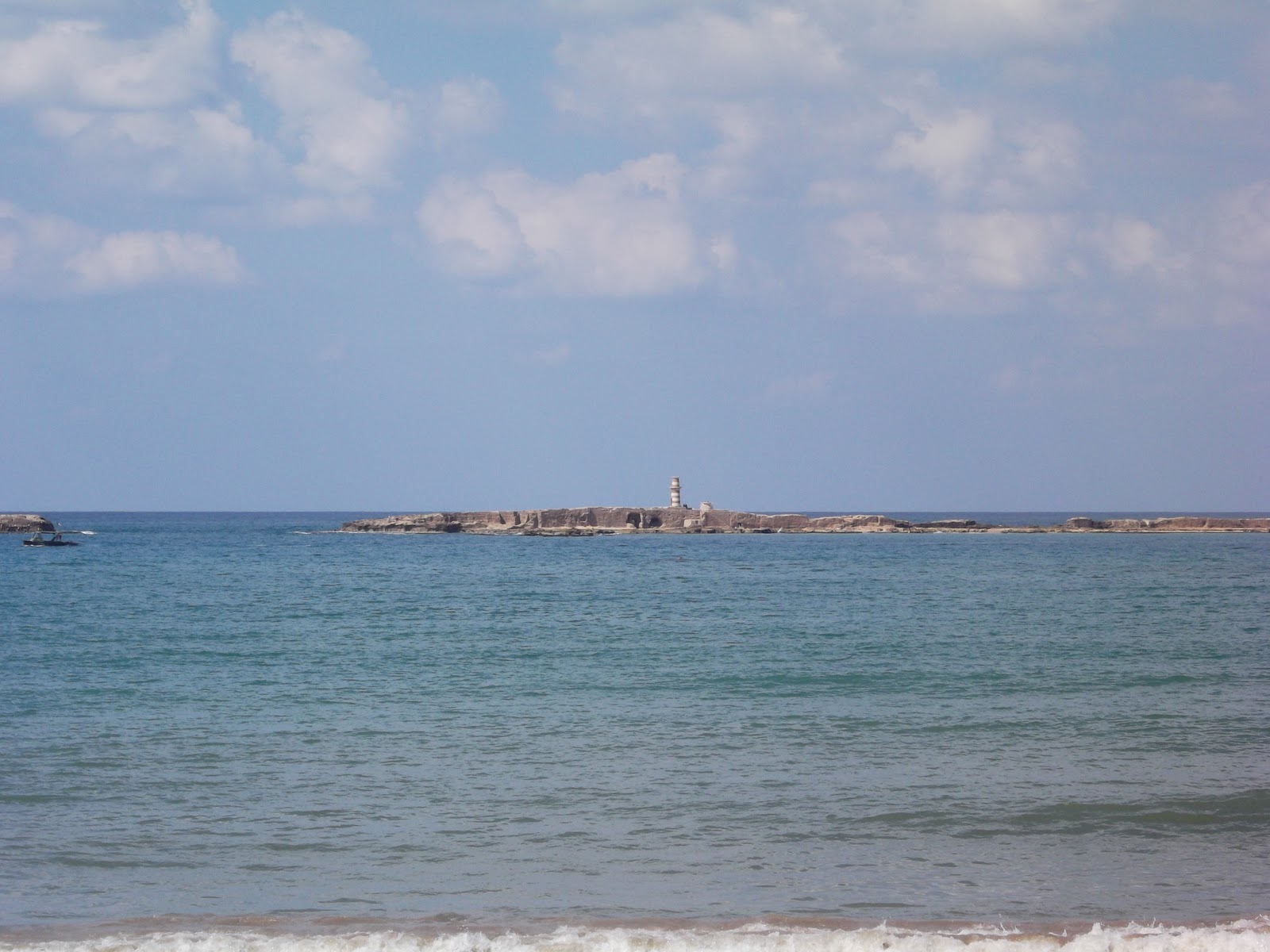
Sidon is one of the great ancient cities of the eastern Mediterranean littoral; a thriving Phoenician metropolis mentioned in the literature of Homer and Herodotus, as well as both the Old and New Testaments (where, in a naked display of Jewish chauvinism, Jesus twice refuses to heal a Canaanite woman, whom he compares to a dog – Matthew 15:21-8), whose population has survived millennia of foreign conquests, be they Assyrian, Babylonian, Egyptian, Greek or Roman (Beirut was always a relatively inconsequential settlement by comparison, not reaching prominence until the 19th century). Today the place retains much of its history, with the ruins of the Crusaders’ Sea Castle and the adjacent Old Souk perched atop the promontory of the port, bejewelled with the winsome lighthouse on the nearby Zeereh Island. The atmosphere is agreeable in other ways, too; for while Sidon is primarily a Sunni city – indeed, it is the hometown of the late Prime Ministers Rafiq Hariri and Riadh es-Solh – the menace of sectarianism is much less palpable than in the northern Sunni heartland of Tripoli, where the residents have even seen fit to erect tributes to Saddam Hussein. Such was my hastily-formed first impression, anyway: with more than half the distance to the border still ahead of us, we lamentably didn’t have time for more meaningful exploration. 

Crusader Sea Castle and Old Souk, Sidon

Zeereh Island, Sidon

Saddam Hussein poster, Tripoli


And so we pressed on south, tracing the gentle convexity of the brilliant Mediterranean through al-Ghaziyeh, site of the killing of eleven children and fifteen other civilians by two Israeli air strikes in ’06; and through Saksakieh, where yet another luckless shop owner fell victim to Hizbullah’s perennial war on alcohol when he arrived one morning in July to find his premises burnt to cinders – a casual trashing of a poor man’s livelihood that shows how much Nasrallah’s gangsters really care for the ‘downtrodden’. Just north of the Litani river, we passed Mazraat al-Yahoudieh – ‘the Jewish Farm’ – where the Jews of Deir al-Qamar had fled during the Christian-Druze war of 1848. God knows whether any Jews live there today - the website of the Lebanese Jewish Community Council puts the total size of today’s Jewish population at “less than 200”; a community that once numbered tens of thousands of Lebanese patriots, forced from their land by barbarous minds who could not distinguish between Jew and Zionist. 

The British Foreign & Commonwealth Office advises against “all but essential travel south of the Litani”. This seems to me an arbitrary point of reference, for there is nothing obviously different about the other side. True, the Party of God certainly makes its presence known, littering the streets with its green-and-yellow flags (bearing the AK-47 insignia it shares with the Iranian regime’s death squads); its morbid galleries of fallen ‘martyrs’; and of course its endless veneration of the Dear Leader himself. But the same could also be said of just about every village we passed since Sidon. It’s also true that crossing the Litani takes one closer to Israel; a state rather famed for its preference for bullets over questions in its dealings with unexpected company. But then the Israeli armed forces can, and do, hit any part of Lebanon they like - as the residents of al-Aabde, a small port town by the northern border with Syria, were reminded when fourteen were killed by Israeli air strikes in '06 (“Nothing is safe”, as the IDF Chief Dan Halutz bragged at the time). 

No, the only difference I could discern as we approached the bay of Tyre (Sour) was an amplification of the splendour of the general surroundings; the sea taking on a lighter, glossier sheen; the clouds breaking apart in tufts of cotton. The city itself is a living refutation of biblical ‘prophecy’; for despite the words of Ezekiel (and more than three decades at the frontline of the Arab-Israeli war), Tyre not only still exists but is once more a centre of regional commerce and culture. Seeing the city in 1697, ruined successively by Crusader and Mamluk conquests, the Oxford academic and Anglican priest Henry Maundrell crudely declared a vindication of scripture:

On the north side it has an old Turkish ungarrison’d castle; besides which, you see nothing here, but a mere Babel of broken walls, pillars, vaults, &c. there being not so much as one entire house left. Its present inhabitants are only a few poor wretches [...] subsisting chiefly upon fishing; who seem to be preserv’d ill this place by Divine Providence, as a visible argument, how God has fulfill’d his word concerning Tyre, viz. That it should be as the top of a rock, a place for fishers to dry their nets on, Ezek 26:14.1

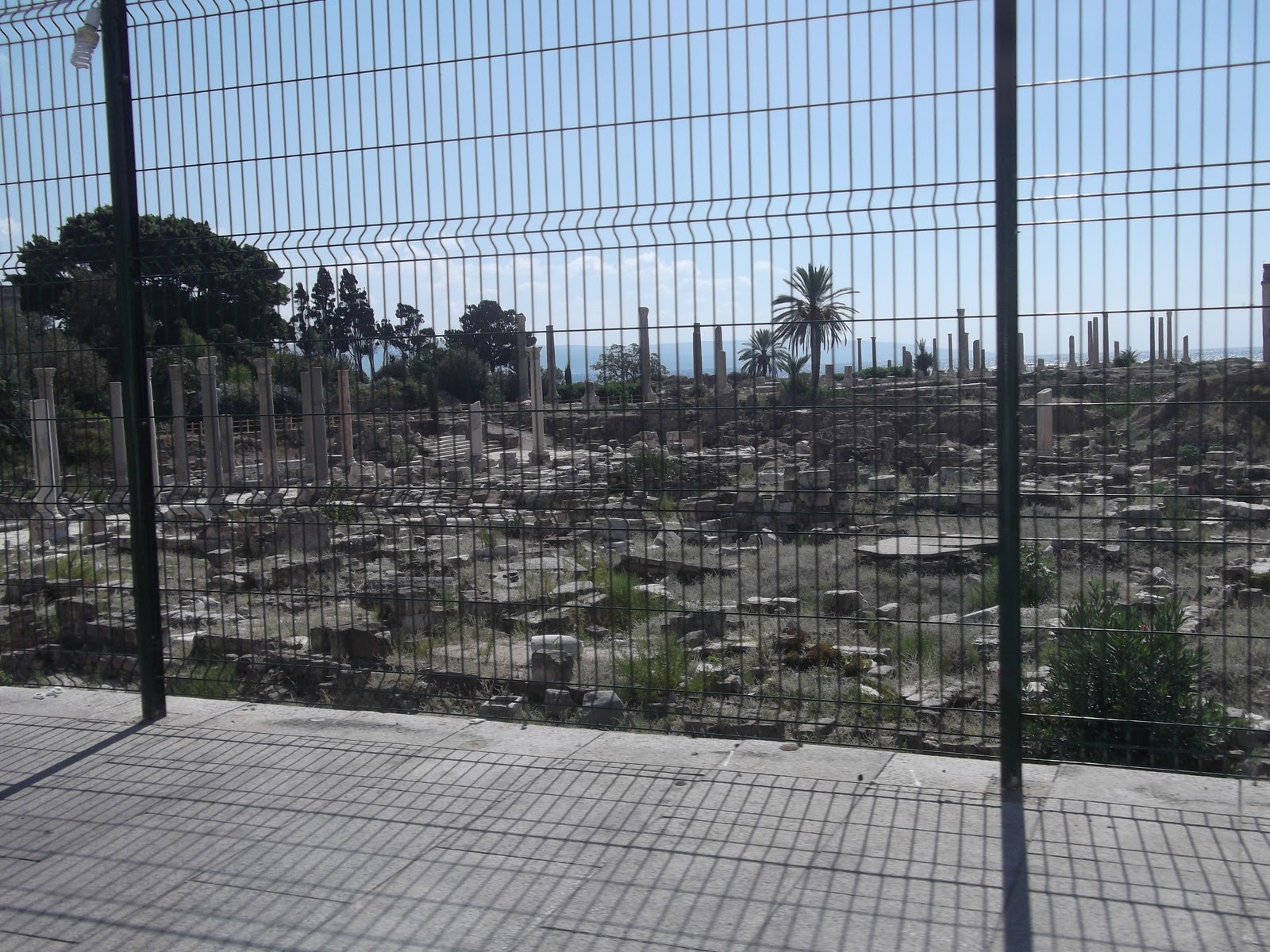
How satisfying it is to see this infantilism made laughable, and to find in Tyre today a population of over 100,000 flourishing in very much “entire” dwellings that, moreover, strike an enviable balance between the polish of urban modernity and the ungroomed charm of the seaside. Stopping at a Byzantine villa-turned-resort – where I was able to get that drink after all – we encountered a group of Europeans who told us they’ve been holidaying in Tyre for years, and I can’t say I blame them. From its unique location, protruding so starkly from the mainland, one can see almost as far as Sidon to the north, and to the beginnings of Israel to the south. And should one tire of idling on the beach, the Roman ruins of the Al Mina excavation site, a mere five minute drive away, are the equal of anything to be seen in Byblos (Jbeil) – just as the shawarmas I had in the city centre were the equal of anything on Beirut’s Bliss Street. I left the city much as I had left Sidon; with regret that I couldn’t have stayed longer and with a wish to return for much more extensive investigation in future. 

View north from the Al Fanar resort, Tyre. Taken by MA

Al Mina Roman excavation site, Tyre


Heading south of Tyre, the road veers inland somewhat, the sea disappearing behind the vast banana plantations that will be disturbingly familiar to those who have seen Ari Folman’s 2008 film, Waltz With Bashir. An ostensible sign of increased danger arrives in the form of an army checkpoint, bearing a stern warning that no “foreigners” may pass without permission from the moukhabarrat, or intelligence agency, in Sidon. My heart plummeted, for I most certainly hadn’t obtained any such permission, and could scarcely imagine the headache that would be involved in doing so. However, by a blessing of fortune that mystifies me to this day, our car was waved through before we had even come to a halt. And so for the next twenty minutes it was us and the bananas, the sighting of other human beings becoming suddenly infrequent. Good pace was made possible by the remarkably fine condition of the roads – newly rebuilt, no doubt, after annihilation in ‘06 – and as the trees cleared and the Mediterranean came once more into view, we soon found ourselves being waved through the checkpoint at the entrance to Naqoura, the small town just two miles from the border that is also the headquarters of the United Nations Interim Force in Lebanon, or UNIFIL. These ‘peacekeeping’ units were initially deployed in response to Operation Litani, Israel’s first invasion of Lebanon in 1978, “for the purpose of confirming the withdrawal of Israeli forces, restoring international peace and security and assisting the Government of Lebanon in ensuring the return of its effective authority in the area”. Given that only the first of these three has been achieved – 22 years later than scheduled, at that, and little thanks to UNIFIL – the poor bastards, despised by Israel and Hizbullah alike, look doomed to be stuck in south Lebanon for quite some time yet. 

Checkpoint south of Tyre
UN base in Naqoura
“From here”, Ali announced as we left Naqoura, “UNIFIL bas”: UNIFIL, and nobody else. And so it proved, as we entered territory that, from 1978 to 2000, was for all practical purposes a part of the Israeli state. To come across a landmine or an unexploded cluster bomb would by no means be unheard of in these deserted plains, and so it was rigidly to the tarmac that we stuck as we began the final stretch, alone but for a UNIFIL jeep a few hundred metres ahead of us. What struck me most about the moment that the road ran out, and we were forced to turn east, was how utterly tranquil the whole scene was. No sniper-topped watchtowers; no rows of tanks; no convoys of helicopters swirling overhead. The border fence itself was the sort of thing a moderately foul-tempered farmer might erect to keep out teenage pranksters, not the frontline between two militarised nations officially at war. The dark green field through which we were driving simply dipped down a slight recess and there, not more than fifty metres away, was a parallel road in Israel. And behind it, not more than five hundred metres away, were the beige walls and red roofs - the same colour scheme I had seen at the Ma’ale Adumim settlement in the West Bank - of the Israeli village of Kfar Rosh HaNikra, a kibbutz and tourist attraction renowned for its grottoes.

UNIFIL jeep
A road in Israel


Israeli village


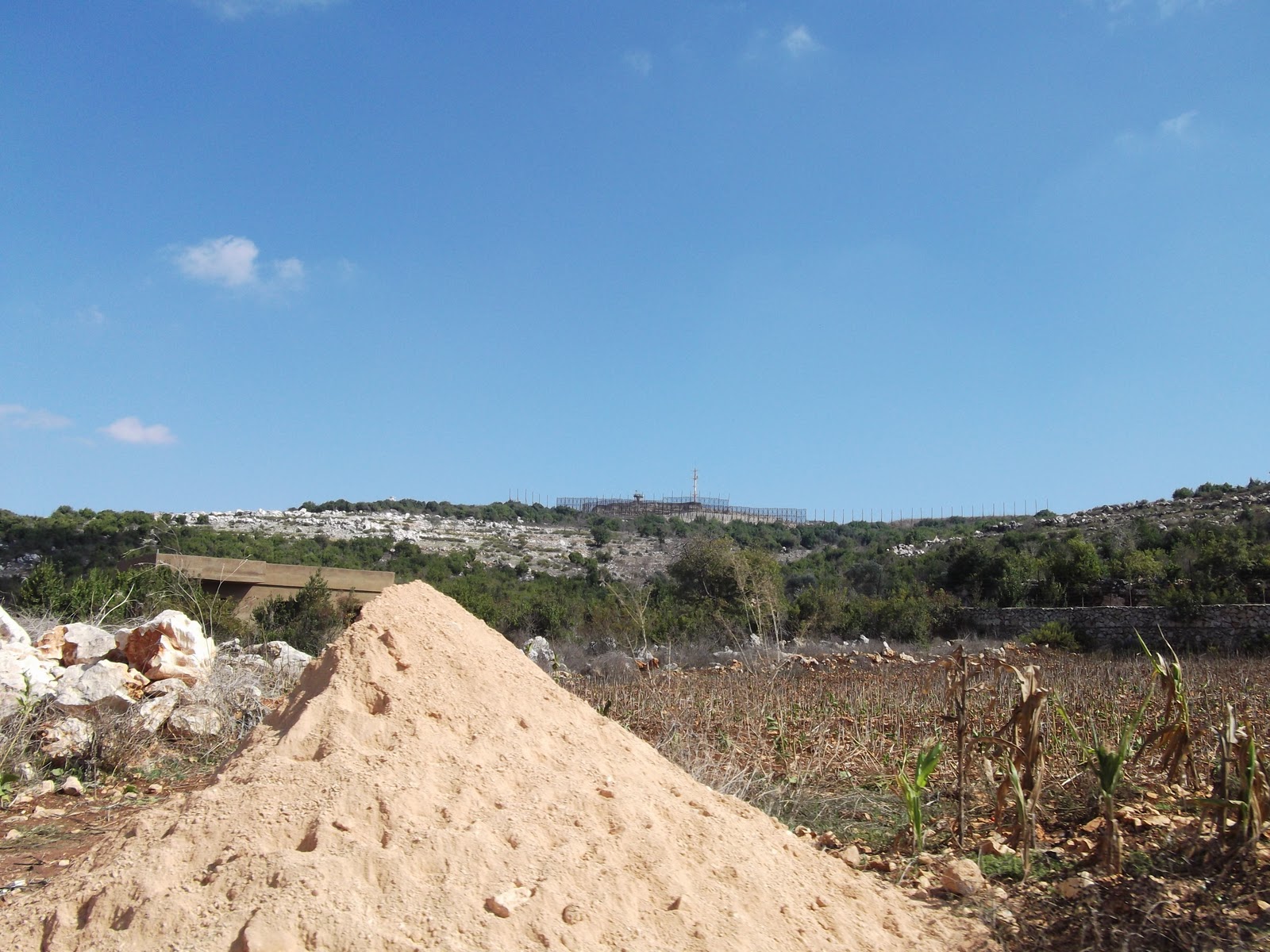
Amazingly, the more we drove east, the more our road and the parallel one in Israel began to converge. We passed Labbouneh, where the kibbutz of Hanita was practically touching the Blue Line; and Btaichiye, opposite the village of Arab al-Aramshe, where three Israeli Arab Bedouin civilians were killed by Hizbullah rocket fire in ‘06. At Boustane, just west of the Nabatieh governorate, we could practically read the number plates of cars in the Israeli village of Zar’it. And still, the calm in the air was preternatural; tantric; catatonic. Can it really have been from this very spot that Hizbullah crossed the border on July 12th, 2006, firing explosives and anti-tank missiles at an IDF jeep convoy, killing eight soldiers and dragging two back into Lebanon alive; in doing so provoking the most destructive Israeli assault on the country since ‘82? Apparently so, and yet aside from a fenced-off compound a couple of kilometres inside Israel, which Ali believably claimed was an IDF base, I could see no one around to stop me doing something similar myself – least of all the UNIFIL patrolmen, who regarded us on the whole with astounding incuriosity, as though to make inquiries about our intentions or indeed to acknowledge our presence at all would be an unpardonable violation of proprieties. 

IDF base in the distance

UNIFIL jeep. Taken by MA


Even the Party of God was nowhere to be seen here. The American writer, Michael J. Totten – of whose book on Lebanon I am no great fan – saw the Blue Line further up to the north-east in ‘05 and posted pictures on his blog of various miscellanea assembled along the border in apparent attempts to intimidate Israelis: wrecked IDF trucks; ‘martyr’ shrines; photos of severed Israeli heads; etc. I have seen similar things myself in Baalbek. But nothing remotely of the kind could be found where we were; indeed, aside from one poster of the late Shiite cleric, Muhammad Fadlallah – bearing the not-too-terrifying inscription, “With my love and blessing” – the only graphic we came across was a white dove painted next to a green cedar on a concrete block. One wouldn’t wish to sentimentalise matters, or to pretend that the Lebanese are pacifists. But it’s useful all the same to have a qualification of the Totten narrative in which the Lebanese side of the border is little but a barbarous carnival of venom and violence.

Israel in the background. Taken by MA


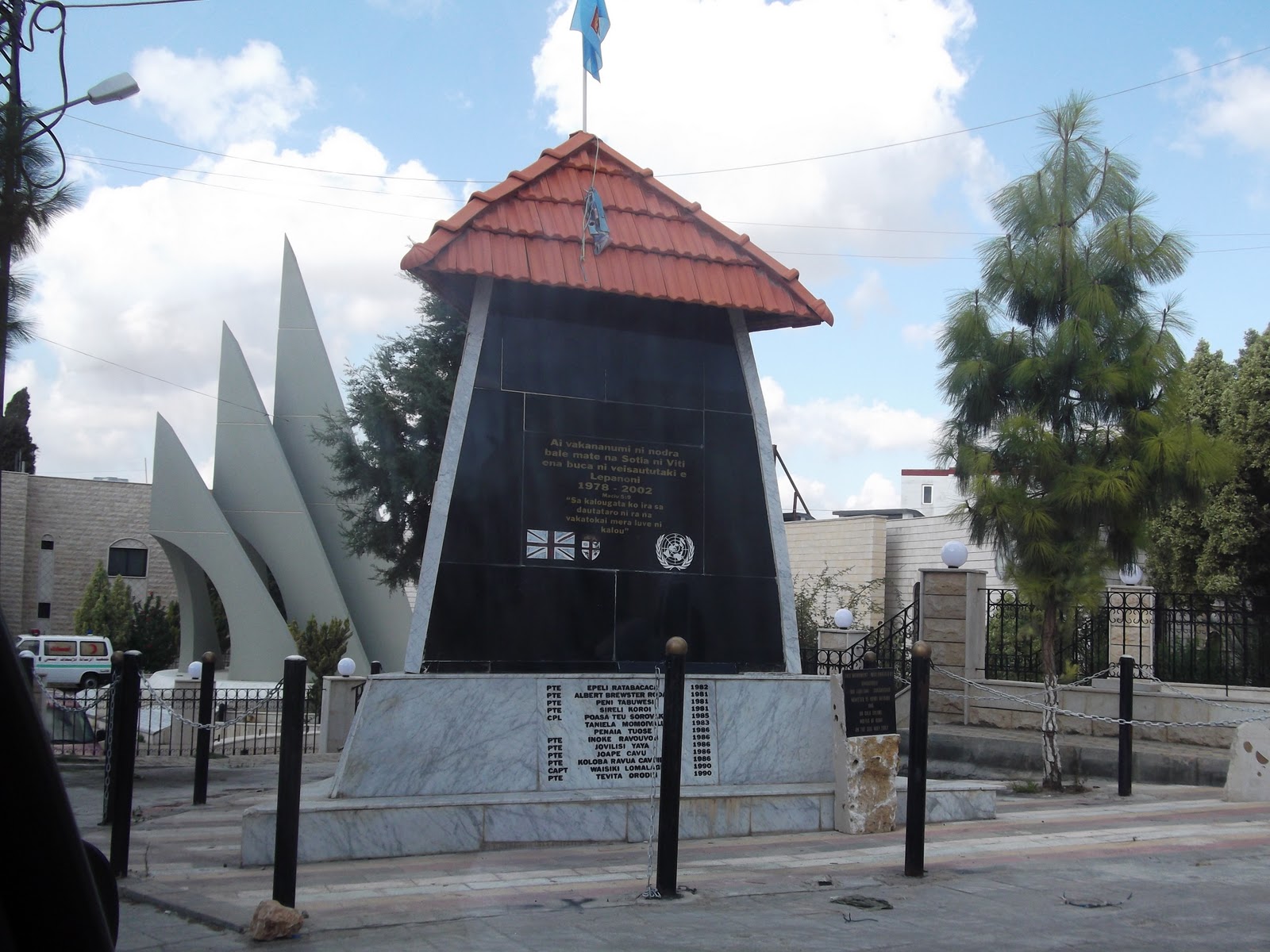
Which brings me, somewhat elliptically, to Qana, roughly ten kilometres north of the Blue Line, which was to be our last stop before rejoining the coastal highway and returning to Beirut. A modest town in many ways, Qana is nevertheless believed by many to be the biblical Cana of Galilee, where Jesus performed his most useful miracle when he supplied the drink at an otherwise boozeless party, thereby delivering the presumably bored guests from further tedium (John 2:1-10). A spiriting distinction, to be sure, but I can’t say I felt much inclined to smile on my visit. For Qana today is a morbid town, known not for miracles but for massacres. The first one occurred during a sixteen-day battle between Hizbullah and Israel in ‘96, when on 18 April, the Israelis deliberately and repeatedly shelled a UN compound that was housing some 850 civilians, killing 106 (over half of them children) in a most unimaginably gruesome manner2. The second came just over a decade later, on 30 July, 2006, when Israeli jets bombed a three-story residential building housing 63 civilians, killing 27 (16 of them children). In both cases, the Israeli government involved itself in a disgraceful series of lies: in the first case claiming that a computer malfunction was to blame, and denying that a pilotless ‘drone’ reconnaissance aircraft had been flying over the compound before the shelling began; and in the second case insisting that Hizbullah combatants had fired rockets from the residential building, thus making it a legitimate military target. In both cases, the Israelis were forced to recant their original claims: in the first case after the discovery of a video clearly filming the ‘drone’ by the UN compound; and in the second after it became clear that eyewitnesses to the attack, including international rescue workers, journalists and human rights observers, were too numerous, and too consistent in their reports to the contrary of the Israeli claim, for the deception to work. In both cases, in other words, the flow of venom and violence was from Israel to Lebanon, not the reverse – a partial vindication, come to think of it, of Ezekiel after all. 

Memorial at the UN compound in Qana


Was it also a partial vindication of Hizbullah, and its claim to be a ‘liberator’ of the land? Certainly there are many who would answer in the positive. And in a way, the question isn’t for me to answer: I may not presume to speak on behalf of my Lebanese companions, for whom the trip we had taken that day would not have been possible just twelve years ago. What it means to stand on one’s national soil, previously stolen by a foreign power is unknown to me. Still, for however little it may be worth, my answer would always be an unhesitating ‘no’. The reason for this was neatly encapsulated in a poster I saw about five minutes south of Naqoura. Impaled on the shore of the resplendent Mediterranean, with the hills of Israel lining the horizon, stood a metal frame displaying the faces of two politicians, neither of them Lebanese: the inaugural Supreme Leader of the Islamic Republic of Iran, Ruhollah Khomeini; and his successor, Ali Khameini. Whether this was an expression of theological solidarity with these most eminent Ayatollahs – as is suggested by the total absence of tributes to the non-clerical President Ahmadinejad - or merely a thank-you for the vast sums of reconstruction funds donated, it points in either case to the long shadow cast by Tehran on Lebanese civil society. 

Khomeini and Khameini, just south of Naqoura


This shadow manifests itself in a number of ways: partly in the trampling of political dissent within the regions of the country which the Party controls, where members of rival factions such as Amal and the Communists are either subjugated or liquidated. It also manifests itself on a national scale, in the acquisition of a huge private arsenal, which the Party uses to suffocate the country’s democracy and hold the entire population hostage to its whims - a humiliation that further involves dragging the government into sordid alliances with grossly unsavoury regimes, most notably the Assad crime family in Damascus and the Putin dictatorship in Moscow (to say nothing of the Iranian theocracy itself). 

But more sinister than any of these is that part of the Iranian shadow that fell on the aforementioned shop owner in Saksakieh. How readily some people appear to forget that the original Hizbullah manifesto, published in the as-Safir newspaper in 1985, called openly and repeatedly for the Lebanese to submit to an “Islamic government” and a “culture [...] based on the Holy Koran, the Sunna and the legal rulings of the faqih [jurist] who is our source of imitation”, clarifying that the faqih in question was “Ruhollah Musawi Khomeini”. And despite much loose talk about the Party ‘softening’ its stance in its amended manifesto of 2009, Nasrallah plainly reaffirmed its “allegiance to the Fakih” and “commitment to the [Islamic] Jurisconsult” when challenged on the point by a journalist at the press conference launching the manifesto. Hizbullah has, in this sense, not removed the Israeli occupation but replaced it. Once again, the essential point is underscored: as long as it’s the mullahs and imams who have the power - or the patriarchs or popes or the rabbis for that matter – then real ‘liberation’ will never be attained. One hopes in Lebanon, as one hopes in every country, that it isn’t too late to realise this, and to act upon it.

1 Maundrell, H., Journey from Aleppo to Jerusalem at Easter A.D. 1697 (1703); as reprinted in Gorton, T.J. & Gorton, A.F., Lebanon: Through Writers’ Eyes (2009), p. 103
2 See esp. Fisk, R., Pity the Nation: Lebanon At War (3rd edition, 2001), pp.669-89